
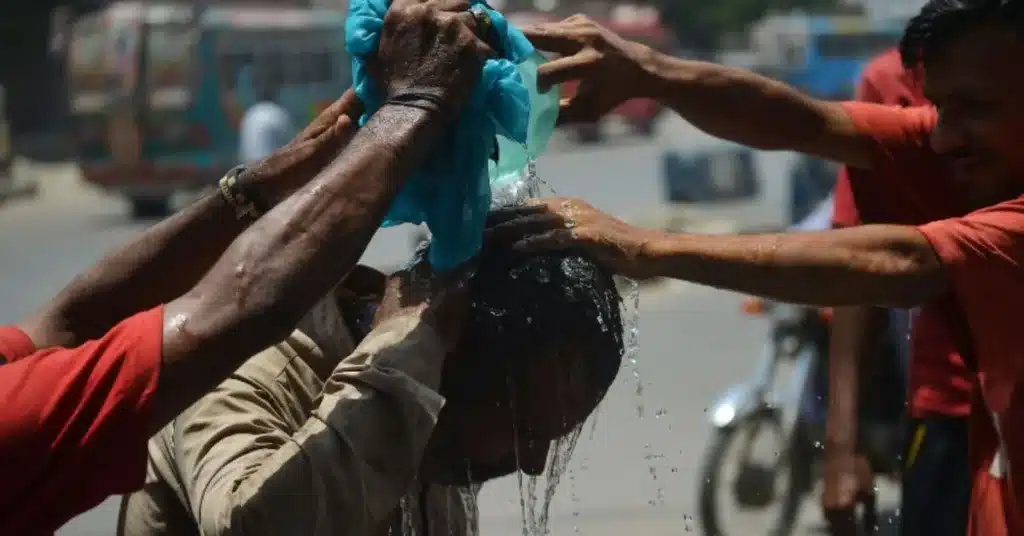
KARACHI (Kashmir English): The ongoing heatwave in Karachi is likely to subside by today (Tuesday), a weather department official predicted on Monday.
According to the Deputy Director meteorological department, the mercury could drop to 38 degrees Celsius today.
He said that another heatwave in Sindh is expected to begin from May 7, while the next spell of rising temperatures in the metropolitan city is expected to begin on May 13.
The weather official advised residents to observe caution, avoid exposure to the Sun, particularly in peak hours of day, and get hydrated by drinking maximum water.
Karachi sizzled on Monday
Karachi sizzled on Monday in the hottest day of this summer as the maximum temperature soared as high as 43 Celsius due to the suspension of sea breeze combined with relentless hot, dry northwesterly winds pushing the city into heatwave conditions.
Similarly, temperatures soared to 43 degrees Celsius in Hyderabad, while the mercury also went above 40 degrees Celsius in Nawabshah, Dadu, Larkana, Sanghar, Sakran, and Mirpur Khas districts of Sindh.
How to Keep Yourself Safe from Heat Waves
Heat has become the leading cause of weather-related deaths worldwide. According to the World Health Organization, an estimated 489,000 people die from heat-related causes each year.
Kazinform News Agency correspondent reports on WHO recommendations on how to stay safe during heat waves.
In extreme heat, the human body struggles to regulate internal temperature, increasing the risk of heat exhaustion, kidney injury, and cardiovascular stress. The effects can be sudden and severe: hospitalizations and deaths may spike within hours or days of a heatwave onset.
WHO emphasizes that the health impacts of heat are predictable and largely preventable. With effective public health measures and coordinated action across sectors, many deaths and illnesses can be avoided. However, awareness remains low both among health workers and the general public.
The WHO recommends staying indoors during the hottest parts of the day and keeping living spaces cool by blocking direct sunlight with curtains or blinds and ventilating at night. Using fans or air conditioning, if available, can offer critical relief, with air conditioners recommended to be set at 27 °C. Even a few hours in a cool environment each day can significantly reduce the risk of heat-related illness.
Hydration is another key aspect of heat protection. People are advised to drink water regularly, even if they do not feel thirsty, about one cup per hour and at least 2 to 3 litres per day. They should avoid beverages that can lead to dehydration, such as alcohol and sugary drinks. Eating lighter meals more frequently can also help the body cope with high temperatures.
Taking cool showers or baths can help lower body temperature, and those who must go outside should remain in shaded areas as much as possible. Light, loose-fitting garments made of breathable fabric, as well as wide-brimmed hats and sunglasses, can offer additional protection outdoors.
WHO also emphasizes the importance of checking in on family, friends, and neighbours, especially those who are older, live alone, or have health conditions that put them at greater risk during extreme heat.
“Some people are particularly vulnerable to the effects of heat, including young children, older people, and people with chronic health conditions, so keep in touch with family, friends, and neighbours, especially those who spend much of their time alone. By looking after each other and staying informed, we can minimize the impact of extreme heat on our communities,” Dr. Skender Syla said.