
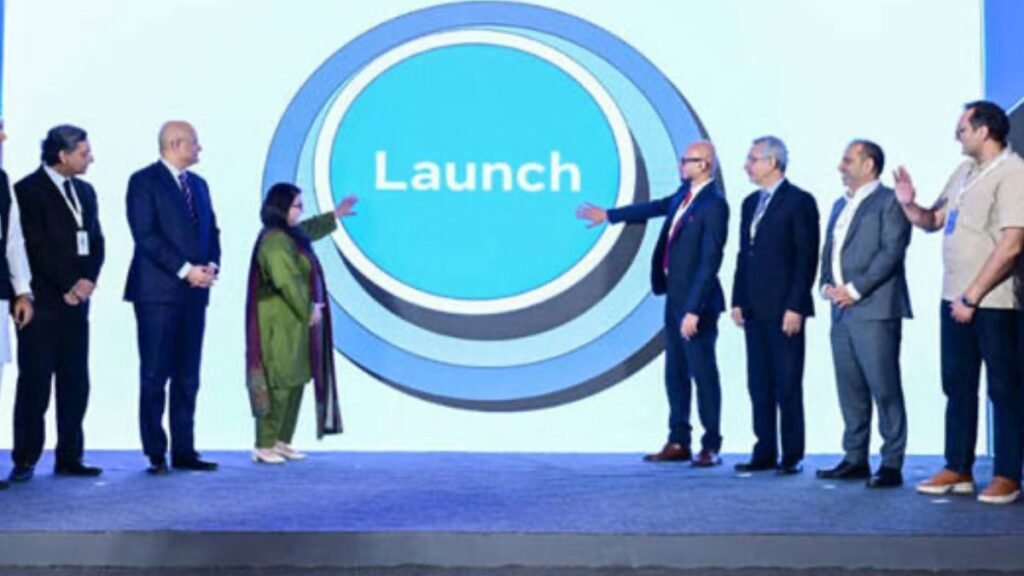
ISLAMABAD (Kashmir English): The Ministry of Information Technology and Telecommunication (MoITT) and Meta have jointly introduced ALIF, an Urdu variant of Meta AI, enabling users in Pakistan to communicate with the AI assistant in their native language.
This should help make Meta AI more inclusive and accessible to the citizens of Pakistan. The rollout was made public during the “Future in Focus: AI and Innovation” event, which is all about promoting digital transformation in the nation.
The event gathered government officials, industry stakeholders, and academia to drive the use of artificial intelligence (AI) and digital innovation across the country.
Throughout the event, a chain of initiatives aimed at empowering Pakistan’s public sector and local community was also unveiled. The launch of ALIF enables more individuals to access information, speak freely, and stay connected with what is most important to them in their native language.
Federal Minister for Information Technology and Telecommunication, Shaza Fatima Khawaja, opened the event. She declared:
Pakistan is moving forward to a future in which technology enables every citizen. Our National AI Policy and collaboration with Meta are manifestations of this vision, progressing AI literacy, digital transformation, and innovation in government and academia.
The company also launched the Asia Pacific version of the “Transforming Public Sector Innovation in Asia Pacific with Llama” guide, created jointly with Deloitte.
The guide, backed by the Ministry, illustrates how Meta’s open-source AI model, Llama, can make government operations more efficient, improve public services, and aid data sovereignty.
Back in March, the Ministry of IT&T, along with Meta, the Higher Education Commission (HEC), the National Computing and Emerging Sciences Accreditation Council (NCEAC), and Atomcamp, rolled out an AI Literacy Program.
The program is designed to reskill 350 non-computer science professors within Pakistani universities, helping them gain fundamental AI skills in order to equip the future workforce.