ISLAMABAD (Kashmir English): Following statements by Pakistan Tehreek-e-Insaf (PTI) leaders Barrister Gohar Ali Khan and Shaukat Yousafzai distancing the party from YouTubers based abroad, a new question has emerged regarding the party’s approach to social media.
While party leaders characterize these YouTubers as detrimental to the PTI, the party’s official X (formerly Twitter) account is seen promoting the very same YouTubers’ videos and commentary.
This contradiction brings into sharper focus questions concerning the party’s social media policy and who truly controls its narrative.
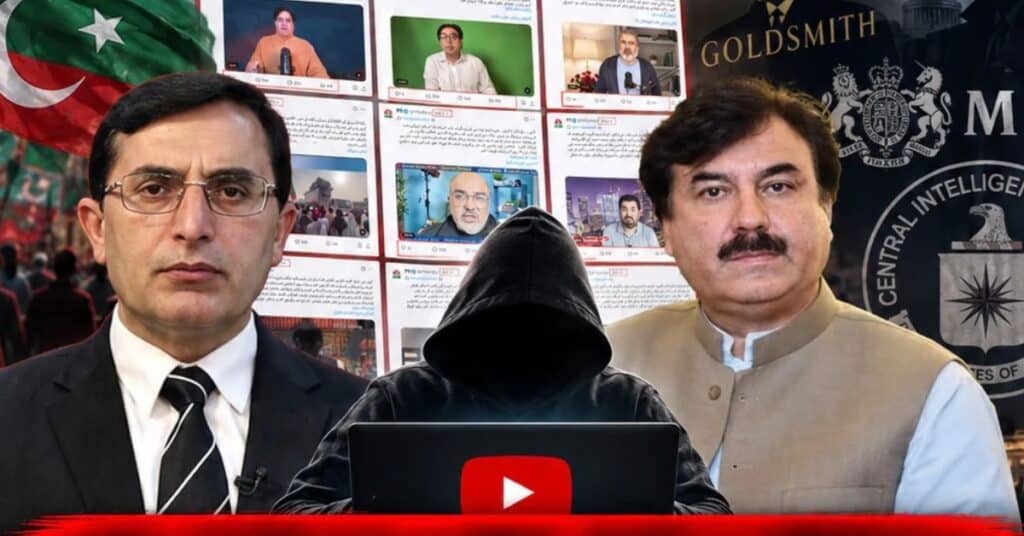
Images circulating on social media show several posts from the PTI’s official X account, dated October 12, 14, and 17. These posts feature videos and political commentary from various YouTubers.
This raises a pertinent question: if the activities of these YouTubers are harming the party, why is their content being featured on an official platform? Is the party’s social media team sharing this content as part of an established policy, or is some other strategy at play?
The issue has gained further significance in light of Shaukat Yousafzai’s accusation that these overseas-based YouTubers are causing harm to the party, coupled with Barrister Gohar’s stance of disassociating the party from them.
If the party leadership does not consider these YouTubers to be its representatives, then it is incumbent upon that same leadership to explain why their content is being promoted on the official account.
Conversely, if their narrative is, in fact, acceptable to the party, then what is the purpose behind statements claiming dissociation?
Against the backdrop of this contradiction, a pointed, ironic question is being raised on social media: who, exactly, is running the PTI? The Goldsmith family, the British intelligence agency MI6, the American CIA—or perhaps all of them?
This question has emerged as a form of political satire and speculation; however, the available images do not constitute proof that any external family or intelligence agency controls the party.
The real question is: who makes the decisions regarding the PTI’s political narrative and social media strategy? Can the party leadership ensure consistency between its stated positions and the content shared on its official accounts? If YouTubers based abroad are causing harm to the party, why is it permitted for their videos to be shared on official platforms?
The discrepancy between the statements made by Barrister Gohar and Shaukat Yousafzai, and the posts appearing on the PTI’s official accounts, requires clarification. The party leadership must clarify its relationship with these YouTubers and explain under whose direction its social media policy is being steered.