
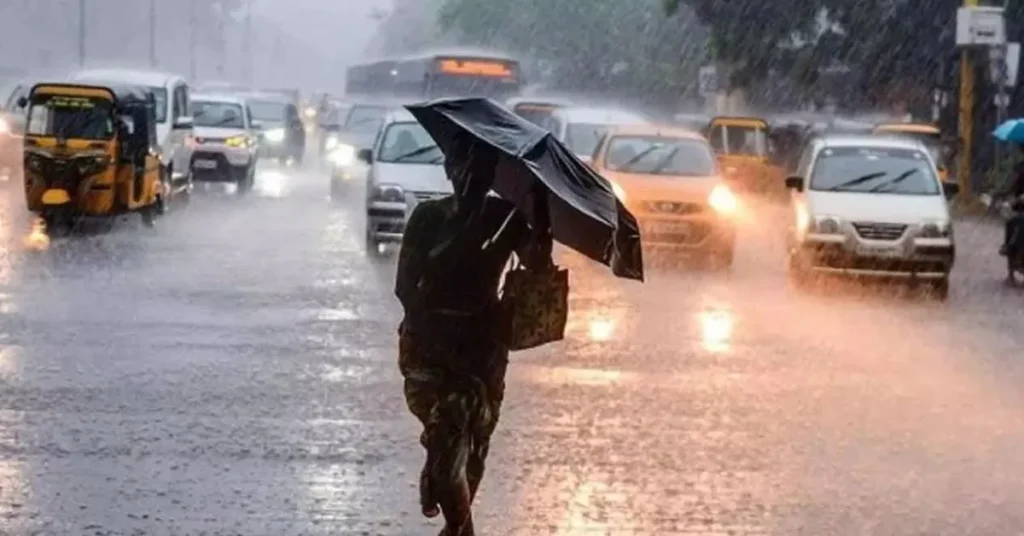
ISLAMABAD (Kashmir English): The Meteorological Department has predicted the regular start of the monsoon season across the country from July 1.
The Meteorological Department says that there is a strong possibility of monsoon winds entering the country from the routes of North-East Punjab and Azad Kashmir, after which the weather system will change.
With the entry of monsoon winds into the country and this major change in the weather system, the National Emergencies Operation Center (NEOC) of the NDMA has also issued a high alert of glacier melting in the hilly and upper areas and the possible dangers arising from it.
According to the alert issued, the current weather situation is exactly in line with the weather assessment issued by the NEOC 3 to 4 months ago, based on which advance awareness is being ensured to all the concerned agencies.
According to the NDMA, this advanced weather assessment is proving to be very helpful for the concerned agencies in dealing with the emergency and ensuring timely preparedness.
NEOC has shown a clear possibility of increased water flow in rivers and streams due to glacial melting for Gilgit-Baltistan, Khyber Pakhtunkhwa, and Azad Kashmir from June 27 to July 03, 2026.
Pressure on glaciers due to intense heat and rain:
There is a serious fear of a further increase in the rate of melting of glaciers due to continuous intense heat and expected rains in the country. Due to this rapid melting of glaciers, the water level in rivers and streams may suddenly rise.
NDMA has warned that the increased pressure on glacial lakes is a serious threat of water leakage, flash floods, landslides, and mudslides.
The authorities have strictly instructed to exercise special caution in Hunza, Nagar, Ghizer, Skardu, Shigar, Ganche, Kharmang, Astore, Diamer, Upper and Lower Chitral, Swat, and their adjoining areas.
In view of the dangers in the valleys and settlements adjacent to the glaciers of Gilgit-Baltistan and Khyber Pakhtunkhwa, the local administration has been ordered to remain on full alert, while unnecessary movement near rivers, streams, and glacial lakes has been directed to be avoided.
The NDMA has emphasized that tourists, travelers, and locals should completely avoid going to the streams and river banks originating from the glacier.
Be aware of the weather conditions and official warnings before traveling to mountainous areas. If there is a sudden increase in the water level, a change in the color of the water, or unusual sounds are heard from the glacier, the concerned administration should be informed immediately.
Infrastructure damage and road closures
Highways, bridges, irrigation systems, and other infrastructure may be severely damaged due to possible flash floods and landslides.
Some connectivity roads in mountainous areas are likely to be temporarily closed, and low-lying areas may be severely affected. In view of this situation, the NDMA has directed the relevant agencies to continue monitoring glacial lakes, rivers, and weather conditions.
Use of a digital alert app
All citizens have been directed to strictly follow the instructions of the administration, traffic police, and law enforcement agencies while travelling.
The NDMA has directed the Provincial Disaster Management Authorities (PDMAs) to prepare for emergencies and ensure the timely availability of necessary machinery and resources. NDMA’s NEOC is continuously monitoring the situation, while citizens can get guidance from the “Pak NDMA Disaster Alert” mobile app for weather conditions, potential hazards, and safety measures.