
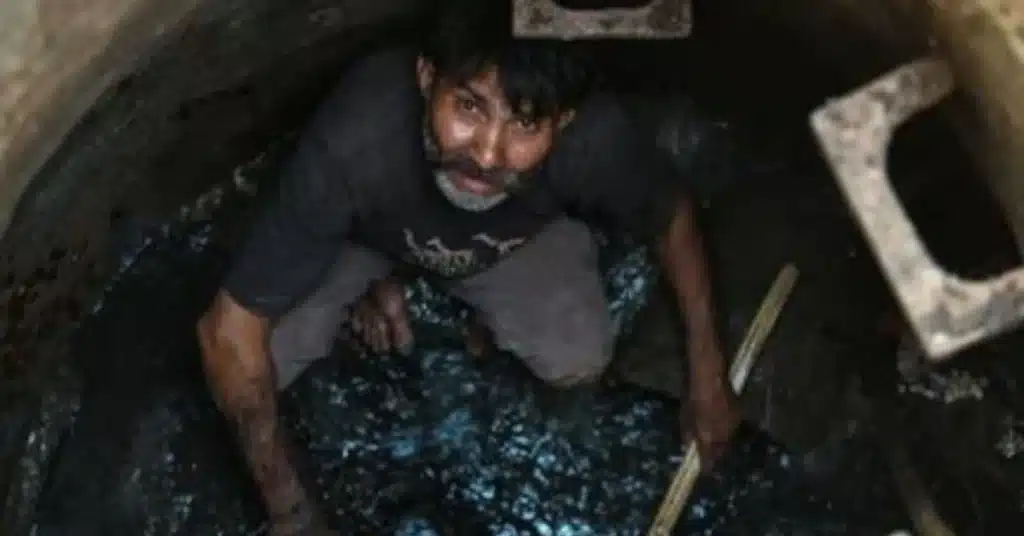
NEW DELHI (Kashmir English): In yet another grim reminder of India’s entrenched caste-based discrimination, more than 55 sanitation workers, most of them from the marginalized Dalit community, died while cleaning sewers, septic tanks and other confined sanitation spaces across India.
The deaths were reported between February and June this year, despite a legal ban on the practice.
According to Kashmir Media Service, the figures were released in a report by the Dalit organization, the Dalit Adivasi Shakti Adhikar Manch (DASAM).
The report said the deaths expose the continued practice of manual sewer cleaning, which remains deeply rooted in India’s caste system, historically marginalized communities particularly Dalits are routinely forced into hazardous underground spaces to remove human waste, often without even the most basic protective equipment.
India deaths
June recorded 18 deaths, while March saw 20 fatalities. Additional deaths were reported in February, April and May, bringing the five-month total to at least 55.
One of the deadliest incidents occurred on June 26 in Delhi’s Mundka industrial area, where three workers reportedly died after entering a septic tank without protective gear.
According to the organization, the victims collapsed one after another while attempting to rescue each other.
DASAM said many workers suffocated after entering toxic sewers or septic tanks without oxygen cylinders, gas detectors, breathing apparatus, safety harnesses or emergency rescue systems.
Although manual scavenging was outlawed under a 2013 law, rights groups say the practice continues due to poor enforcement, inadequate mechanization and the widespread outsourcing of sanitation work through contract labor.
DASAM noted that many sewer-related deaths are officially classified as workplace or industrial accidents rather than violations of the law, allowing contractors and public authorities to evade accountability.
Describing the deaths as caste-based structural violence, DASAM called for criminal prosecution of contractors and officials responsible for unsafe working conditions, mandatory police investigations into every sewer-related death, enhanced compensation for victims’ families and the urgent mechanization of sanitation work.
Human rights campaigners have long maintained that the continued prevalence of manual scavenging reflects deeply entrenched caste discrimination and the persistent failure of successive Indian governments to effectively enforce laws aimed at eradicating the inhuman practice and rehabilitating affected workers.