ISLAMABAD (Kashmir English): The Power Division has exempted K-Electric and the Hyderabad Electric Supply Company (HESCO) from the government’s daily loadshedding plan.
K-Electric distributes electricity to seven districts of Karachi, while HESCO distributes power to districts in the south of Sindh, including Hyderabad, Tatta, Sujawal, Badin, Tharparker, Mirpur Khas, Umarkot, Tando Allahyar, Tando Muhammad Khan, Shaheed Benazirabad, Sanghar, and Jamshoro.
It came after the officials announced more than two hours of daily electricity loadshedding during peak times to “prevent an increase in electricity tariffs“.
— MOE- Power Division, Government of Pakistan (@MoWP15) April 14, 2026
However, a statement issued later in the day from the Power Division’s spokesperson said that, due to the presence of cheap power generation in the south of the country and its supply to HESCO and K-Electric, load management under the 2.25-hour peak hours relief strategy is not being implemented in these two power distribution companies.
The main reason for this is that these two distribution companies have no impact on the furnace oil-powered plants, the statement said, adding that there is an ample supply of electricity generated from sources other than furnace oil in the south of the country.
“In the south, this electricity is provided only to these two distribution companies, so in this regard, consumers are not being unnecessarily inconvenienced,” it wrote.
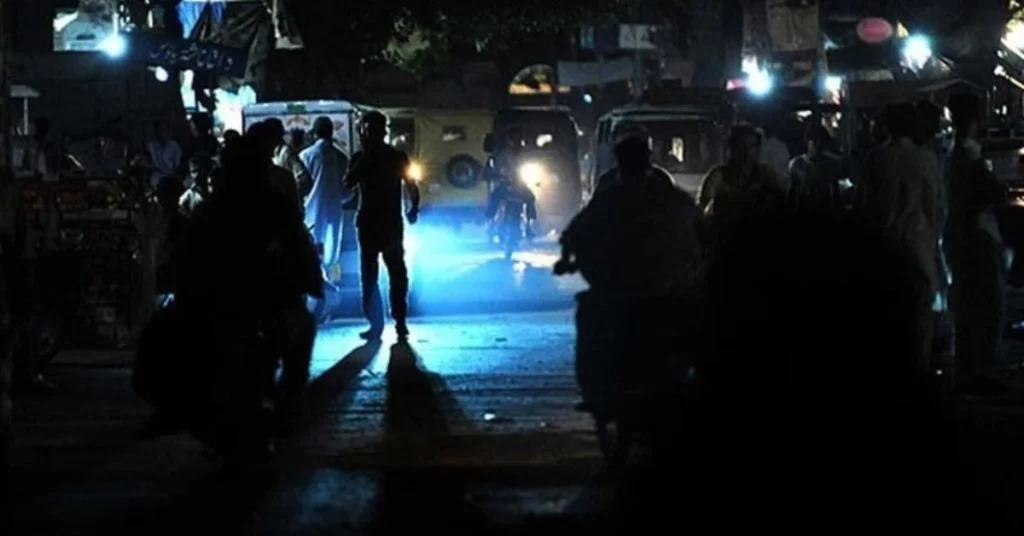
Electricity loadshedding
The federal government announced more than two hours of daily electricity loadshedding during peak times to “prevent an increase in electricity tariffs”.
In a news release regarding the “Peak Hours Relief Strategy”, the Power Division said that the government has decided to suspend “electricity supply for about 2.25 hours daily between 5:00 pm and 1:00 am”.
It said that this step is aimed at reducing the use of costly fuels and preventing a sharp rise in electricity prices.
The officials said that the limited load management of more than two hours will prevent an increase of around Rs 3 per unit.
“Even with the restricted use of furnace oil, there may still be an increase of about Rs 1.5 per unit. Without these measures, the increase could have reached Rs 5 to Rs 6 per unit,” the Power Division spokesperson explained.