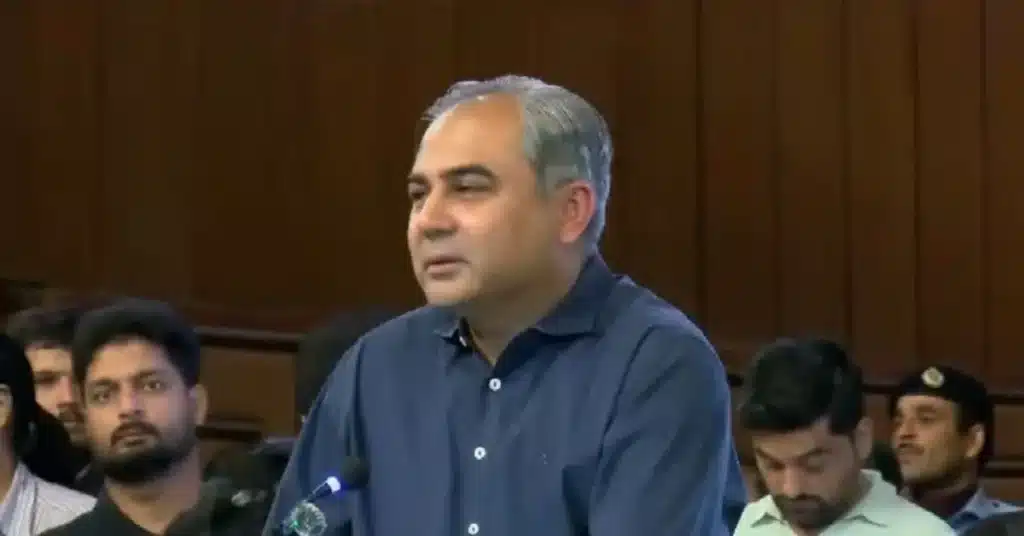
ISLAMABAD (Kashmir English): Federal Interior Minister Mohsin Naqvi on Thursday called for new provinces and administrative units, consensus among all political parties, and comprehensive reforms within the democratic system.
Addressing Pakistan’s first Economic Summit 2026 in Islamabad, the Interior Minister said the political and administrative systems must be reformed to make governance, justice and basic services more accessible to ordinary citizens.
“The solution to Pakistan’s fundamental problems is not possible with temporary measures alone, but only with comprehensive reforms within the democratic system,” he said.
The country needs new administrative units, merit, justice at the local level and an effective role for the business community in decision-making, he added.
The minister noted that he was a strong supporter of democracy but noted that different democratic systems existed. He also stressed the need to provide employment opportunities on merit, saying young people wanted jobs through a fair process rather than financial handouts.
Naqvi further said Pakistan’s “cockroaches” could turn everything upside down if they unite. “Young people have only one demand: they want jobs on merit,” he added.
The federal minister further said Pakistan’s growing debt burden required urgent attention, warning that continued borrowing without reforms would worsen the country’s economic challenges.
He said Prime Minister Shehbaz Sharif worked 12 to 14 hours a day, but added that even 18-hour workdays amounted to “firefighting” without broader institutional reforms.
The interior minister said powers should be devolved to lower administrative levels and provinces should be divided on administrative grounds to improve governance and speed up development.
Mohsin Naqvi urged all political parties to sit at one table and prepare a joint action plan for administrative reforms, devolution of powers to the grassroots level and permanent solutions to national problems, adding that otherwise the country’s economic and administrative problems will persist.
He said that until fundamental reforms are made in the system, only speeches, meetings, and seminars will not solve the problems. He also demanded that the business community raise its voice for reforms and local powers.