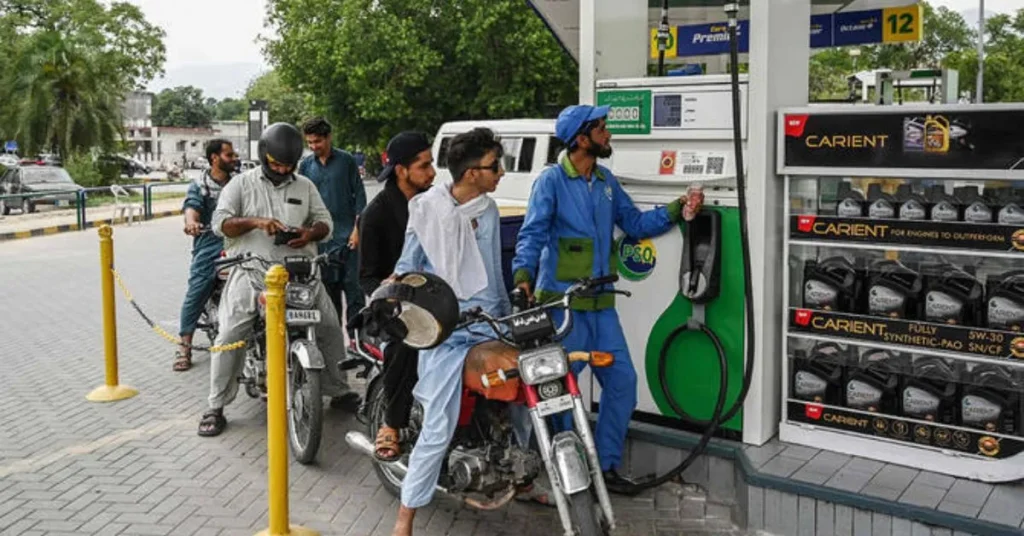
ISLAMABAD (Kashmir English): The federal government has announced a targeted petrol relief scheme under which eligible motorcycle, rickshaw, Qingqi and other two- and three-wheeler users will receive a subsidy of Rs100 per litre on up to 20 litres of petrol per month.
Owners of small cars with engines of up to 800cc will also qualify for the relief, with a monthly quota of 30 litres. Under the scheme, eligible motorcycle and three-wheeler users can receive petrol relief of up to Rs2,000 per month, while small-car owners can save up to Rs3,000 monthly.
Prime Minister Shehbaz Sharif announced the initiative as the government seeks to provide targeted relief to lower-income citizens affected by rising fuel prices. The scheme is aimed particularly at commuters and people who depend on motorcycles, rickshaws and small vehicles for their daily travel and livelihoods.
According to the rollout plan, registration for the scheme has begun today, September 13. The subsidy is expected to become operational in Islamabad during the night between September 14 and 15, while implementation across the rest of Pakistan, including Azad Jammu and Kashmir and Gilgit-Baltistan, is scheduled to begin during the night between September 16 and 17.
The announcement comes as petrol prices have reached record levels under Pakistan’s fuel-pricing mechanism. Petrol is currently priced at Rs375.82 per litre, following an increase of Rs5.02 on September 12, while high-speed diesel is priced at Rs403.32 per litre.
The government had previously been working on a mobile-app-based system for providing targeted fuel subsidies to motorcycle and rickshaw users. A proposal for a monthly 20-litre quota for motorcycles was also reported earlier this year.
Unlike a blanket fuel subsidy, the latest initiative is designed to provide direct assistance to specific categories of vehicle users who are more dependent on petrol for commuting and income generation.
The government has yet to release complete details regarding the registration and petrol redemption process. Citizens are therefore advised to use official government channels only and avoid sharing CNIC, vehicle or banking information with unofficial websites or mobile applications.