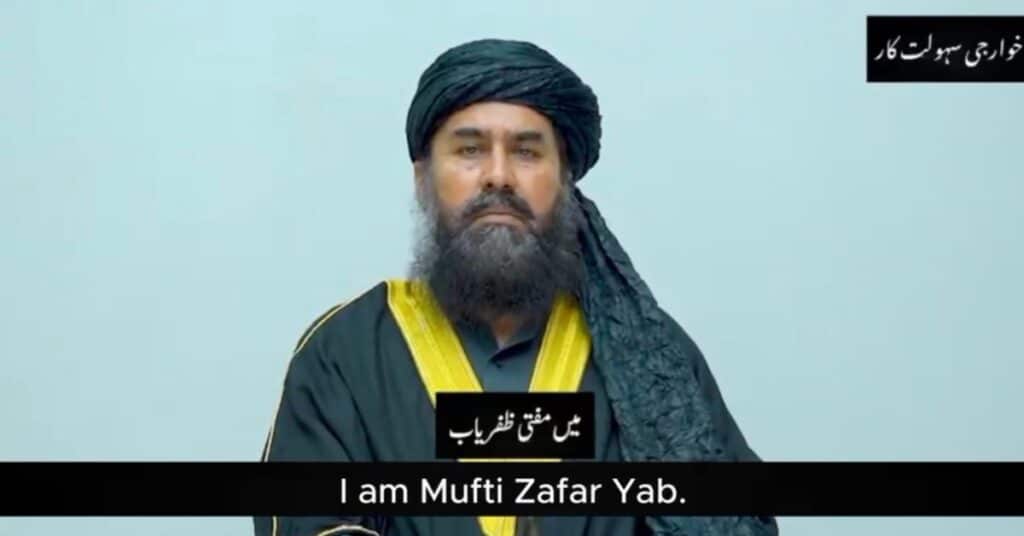
ISLAMABAD (Kashmir English): A recent video of arrested foreign Khawarij facilitator Zafar Yab has renewed concerns over the alleged use of illegal madrassas and self-styled religious figures by extremist networks to facilitate terrorism.
In a video confession, Zafar Yab claimed that after studying at religious institutions, including Jamia Nizam-ul-Uloom Bannu, he became associated with elements linked to Fitna-ul-Kharij.
The statement alleges that extremist leaders misused religious concepts, including the term jihad, to justify extortion, intimidation and other unlawful activities through arbitrary religious decrees.
The reported disclosures have reignited debate over the importance of regulating unregistered religious seminaries. Officials maintain that madrassas operating outside the state’s regulatory framework, without proper registration, financial transparency and educational oversight, may be vulnerable to exploitation by extremist elements.
Authorities also recalled that under the National Action Plan (NAP), an agreement was reached in 2019 between the federal government and religious education boards to bring all madrassas under a legal and regulatory framework.
The agreement included mandatory registration with the Federal Ministry of Education, financial transparency through bank accounts, maintenance of records of foreign students, and official monitoring of institutional data.
20,052 Madrassas registered across Pakistan
According to the Directorate General of Religious Education, as of May 2026, a total of 20,052 madrassas are registered across Pakistan. These include 11,574 in Punjab, 4,532 in Khyber Pakhtunkhwa, 2,501 in Sindh, 619 in Balochistan, 513 in Azad Jammu and Kashmir, 217 in Islamabad and 96 in Gilgit-Baltistan.
Officials say the registration and monitoring system has been introduced to ensure transparency, improve educational standards and prevent the misuse of religious institutions by individuals or groups involved in terrorism, extremism or other illegal activities.
The government maintains that all religious seminaries should operate in accordance with national laws and security requirements.