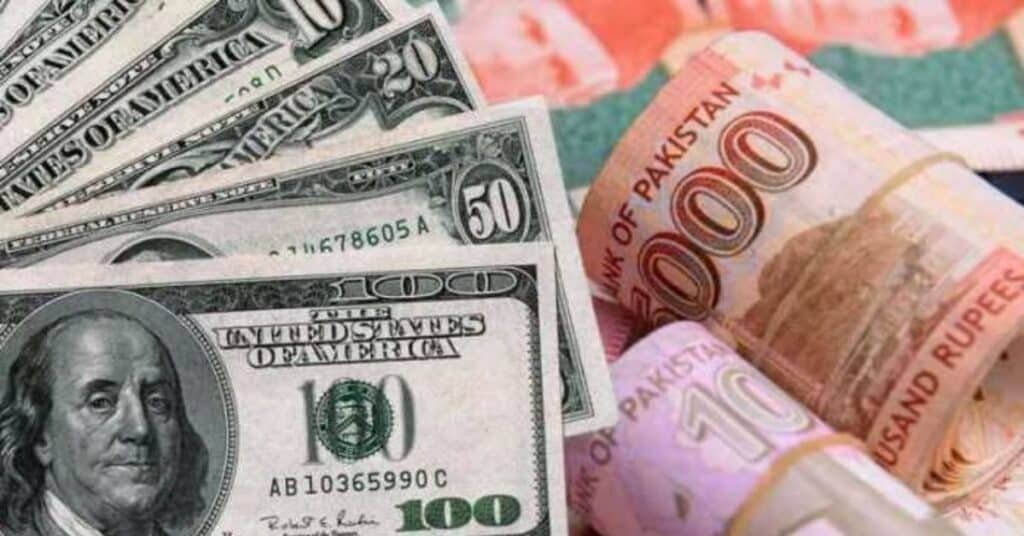
KARACHI (Kashmir English): The State Bank of Pakistan (SBP) said in its report that Pakistan’s foreign exchange reserves have crossed $22.58 billion.
According to SBP data, the foreign exchange reserves held by the central bank on August 21 stood at $17.98 billion, which represents an increase of about $170 million in the week.
The foreign exchange reserves held by commercial banks were recorded at $5.48 billion. Thus, the country’s total liquid foreign exchange reserves, including the reserves of the State Bank and commercial banks, have reached $22.58 billion.
According to State Bank data, the total foreign exchange reserves were $22.506 billion on August 13, 2026, of which the central bank’s reserves were $17.819 billion, and the commercial banks’ reserves were $5.424 billion.
Thus, the total reserves increased by about $81.3 million in a week, while the central bank’s reserves increased by about $16.6 million. The reserves of commercial banks also increased by about $64.7 million.
The improvement in foreign exchange reserves is considered important for Pakistan’s external payments capacity and meeting import needs.
The reserves held by the central bank play an important role in meeting the country’s external financial needs, import payments, and currency market stability.
Is SBP considering discontinuation of Rs10 currency note?
The State Bank of Pakistan (SBP) is considering discontinuing the Rs10 currency note due to its rising production cost and replacing it with a coin.
The matter was discussed during a meeting of the Senate Standing Committee on Finance chaired by Senator Saleem Mandviwalla, where the central bank’s Deputy Governor, Dr Inayat Hussain, told the Senate body.
Dr Inayat said the cost of printing the Rs 10 note has increased, and the denomination would be discontinued when the new currency notes are introduced. A coin would be issued in its place.
The committee was also informed that the design proposed for the new banknote series had been rejected by a committee headed by the finance minister.
SBP Deputy Governor Dr Inayat Hussain said that, following the committee’s recommendations, new security features and design changes were being incorporated into the proposed currency notes.
The central bank’s Executive Director said that the introduction of new banknotes alone may not completely eliminate the circulation of counterfeit currency.
According to the officials, counterfeit Rs1,000 and Rs5,000 notes are currently among the denominations most frequently reported in circulation.
The committee chairman, Senator Saleem Mandviwalla, said that fake currency was allegedly being dispensed through banks and ATM machines, claiming that the problem had made some shopkeepers reluctant to accept Rs1,000 and Rs5,000 notes.
The SBP deputy governor maintained that the circulation of counterfeit currency in Pakistan was comparatively lower than in several other countries.