
LAHORE (Kashmir English): When Pakistan crashed out of the ICC Men’s T20 World Cup 2026 at the Super Eight stage, the fallout was swift, fierce, and — even by the dramatic standards of Pakistan cricket — deeply unusual. Reports emerged that the Pakistan Cricket Board (PCB) had slapped every squad member with a Rs5 million performance fine, a move that ignited a national debate stretching from cricket commentary desks to social media timelines.
But as the dust settled, a bigger question emerged: did the fine actually happen and if so, does it solve anything?
What Happened to Pakistan at T20 World Cup 2026?
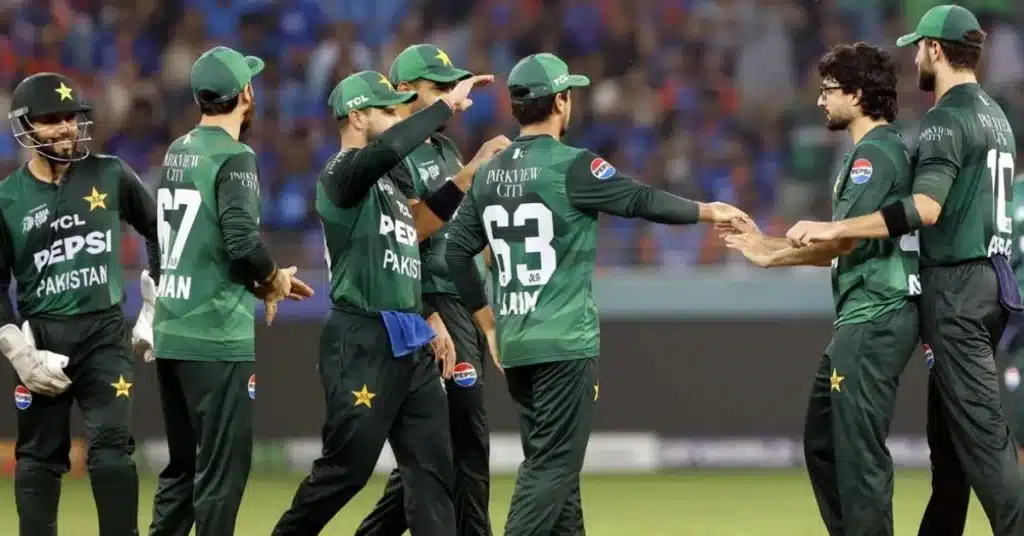
Pakistan’s tournament began with shaky wins over the Netherlands and the United States results that generated more anxiety than confidence. The campaign unravelled completely on February 15, 2026, when the Men in Green were dismantled by India in a group-stage clash in Colombo, losing by a massive 61 runs in what was widely considered one of their worst batting performances in recent memory.
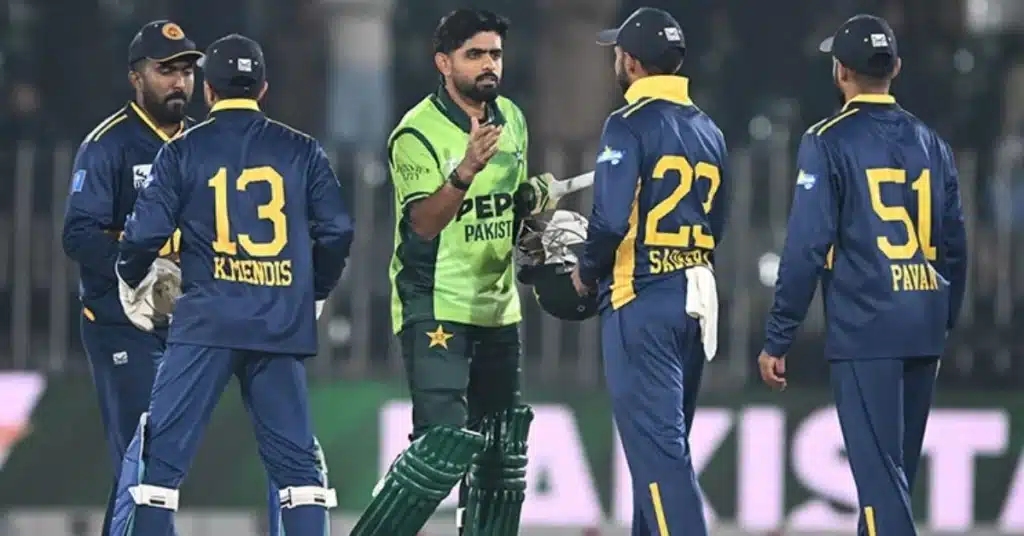
Despite that humiliation, Pakistan limped into the Super Eight stage, avoiding a third consecutive first-round exit. But the relief was short-lived. A rain-washed game against New Zealand yielded nothing. A defeat to England followed. The final Super Eight fixture against Sri Lanka produced a narrow five-run victory — but the margin was nowhere near enough to improve Pakistan’s net run rate and leapfrog New Zealand into the semi-finals.
The result was a historic and painful milestone: Pakistan had now failed to reach the semi-finals of four consecutive ICC men’s events — an unwanted first in the country’s cricketing history. The 2009 World T20 champions were officially in crisis.
Were Pakistan Players Actually Fined by PCB?
This is the question every cricket fan in Pakistan has been asking and the answer sits in a grey zone between credible journalism and institutional denial.
Multiple reliable outlets, led by ESPN Cricinfo, reported that the PCB had imposed a fine of Rs5 million (approximately $18,000) on every member of the T20 World Cup squad. Crucially, these fines were not linked to any disciplinary misconduct or dressing room controversy. They were imposed purely on the basis of what the board considered unacceptable on-field performance — with the squad having been informed of the penalty immediately after the India defeat, and told that the fine would be waived if they reached the semi-finals.
They did not reach the semi-finals. The fines, according to these reports, were enforced.
Days later, however, PCB spokesperson Amir Mir issued a flat denial, calling the entire episode “social media gossip” and stating that no such decision had ever been made or even discussed at board level.
So where does the truth lie? ESPN Cricinfo did not retract its reporting. The PCB has a well-documented history of floating punitive measures publicly, gauging the reaction, and then quietly stepping back. Whether the fine was real, threatened, or fabricated remains genuinely contested — but the conversation it sparked is entirely real and important.
Why Did the PCB Fine Players for Losing Not for Discipline?
What made this episode so extraordinary was not just the fine itself, but its stated basis. Cricket boards around the world routinely sanction players for misconduct, doping violations, or contract breaches. The PCB has done this too — Shoaib Akhtar alone fills an entire chapter in the board’s disciplinary history.
But fining an entire squad specifically because the team lost cricket matches is something no major cricket board had done before. The PCB’s logic, according to reports, was rooted in a simple principle: just as players receive bonuses and incentives for strong performances, they should face financial consequences when they fall short of expectations on the biggest stage.
The board had reportedly already tested this philosophy months earlier, briefly suspending No-Objection Certificates for overseas T20 leagues following a narrow Asia Cup final defeat to India — though that suspension was quietly lifted after pressure from players and agents.
The pattern suggests a PCB administration that is frustrated, reactive, and willing to use financial levers as tools of pressure — whether or not those levers are legally sound.
Is It Legal to Fine Cricketers for Poor Performance?
This is the most legally significant dimension of the entire controversy, and the answer is: almost certainly not — at least not on solid contractual ground.
Pakistan’s central player contracts contain detailed clauses around incentives, bonuses, and disciplinary deductions. However, legal experts and cricket analysts who reviewed the contracts found no clear provision authorizing the PCB to deduct money from a player’s earnings simply because the team performed poorly in a tournament.
The World Cricketers’ Association (WCA) weighed in directly. Its CEO Tom Moffat issued a formal statement condemning the reported fines, warning that unilaterally penalizing athletes for on-field results — outside the agreed terms of their professional contracts — sets a dangerous precedent for sports governance worldwide. The WCA made clear it would never support such a measure and called on the PCB to respect the professional rights of its players.
In simple terms: a board can drop a player, terminate a contract, or restructure salary tiers. But docking pay because a team lost a cricket match — without a specific contractual clause authorizing that penalty is on very shaky legal ground. No other top cricket board in the world has gone down this road.
What Did Shahid Afridi Say About the PCB Fine?
Shahid Afridi did not hold back. Speaking on Pakistani television, the former captain and all-time legend labeled the decision “choti soch” — small-mindedness — and questioned both its intent and its logic.
Afridi argued that Rs5 million is not a meaningful financial deterrent for a player earning several million rupees monthly. In his view, the fine does not punish underperformance — it merely embarrasses the players without driving any structural change.
More meaningfully, Afridi proposed a real alternative: players who consistently underperform at the international level should be returned to domestic first-class cricket for a minimum of two years, asked to rebuild form and earn their place back through performance rather than reputation. That, he argued, is a genuine accountability measure — not a token fine that generates headlines and solves nothing.
What Did Younis Khan Say?
Former Pakistan captain Younis Khan took an even more assertive stance. He urged the players to collectively push back against the PCB’s decision, reminding them that a similar situation arose in 2003 when the board attempted to fine players after a poor tournament showing. On that occasion, the players stood firm together, and the PCB reversed its decision.
Younis also raised the fundamental question of selective accountability: if the players are to be fined for losing, then the selectors who assembled the squad, the coaching staff who prepared the team, and the board officials who made key strategic decisions must face equal consequences. Accountability, he argued, cannot begin and end with the players on the field.
What Did Ahmed Shehzad Do?
In a moment that captured the public mood perfectly, former Pakistan opener Ahmed Shehzad made a bold televised declaration: he offered to personally pay the Rs5 million fine on behalf of every single player in the squad — on the condition that it would genuinely improve Pakistan cricket.
His gesture was equal parts sarcasm and sincerity. It highlighted how many in the cricket community viewed the fine as a performative measure designed to appease an outraged public rather than a serious step toward reform. The clip went massively viral across social media platforms within hours.
Was Sahibzada Farhan Fined Despite a Historic Performance?
Perhaps the single most glaring injustice of this entire episode is the case of Sahibzada Farhan.
While Pakistan as a team underperformed catastrophically, Farhan individually produced one of the greatest batting campaigns in T20 World Cup history. The Peshawar-born opener scored a record 383 runs across the tournament — shattering the previous record held by Virat Kohli — and became the first batter in T20 World Cup history to score two centuries in a single edition.
Under the PCB’s blanket fine policy, Farhan — the tournament’s highest run-scorer and arguably its best individual performer — was reportedly fined the same Rs5 million as players who contributed almost nothing to the campaign.
This is not accountability. This is collective punishment that makes no distinction between brilliance and failure. Fining a record-breaking batter alongside teammates who added little is not only unfair it actively undermines the kind of individual excellence Pakistan cricket desperately needs to encourage.
How Many Times Has Pakistan Missed the ICC Semi-Finals?
Pakistan’s 2026 T20 World Cup exit extended a truly bleak run. The Men in Green have now failed to reach the knockout stage of four consecutive ICC men’s tournaments — a sequence that spans T20 World Cups and other major ICC events. No Pakistan side in history had previously endured such a prolonged absence from the latter stages of global cricket.
For context, Pakistan won the T20 World Cup in 2009, reached the final of the 2007 inaugural event, and were consistently competitive throughout the 2010s. The decline since then has been steep, sustained, and deeply concerning.
Should the PCB Itself Be Held Accountable?
This may be the most important question of all — and the one the PCB is least comfortable answering.
The players take the field and execute. But the decisions that shape how they perform — who gets selected, who coaches them, what strategy they follow, how the domestic system prepares them — are made entirely by the board and its management structure.
Pakistan’s T20 crisis has unfolded against a backdrop of constant captaincy changes, a revolving door of coaches and selectors, an NOC policy that has historically restricted players from gaining vital franchise experience abroad, and a domestic structure that critics argue does not adequately prepare players for international pressure situations.
Fining the players without conducting an equally rigorous audit of the board’s own decision-making is not accountability — it is scapegoating.
What Happens Next for Pakistan Cricket?
Captain Salman Agha acknowledged the underperformance openly after the Sri Lanka match but avoided making any immediate announcement about his future in the role. The PCB is expected to conduct a full performance review, though the scope, transparency, and consequences of that review remain to be seen.
Several senior players face uncertain futures in the T20 format. The domestic structure is under scrutiny. And the question of whether Pakistan can end its ICC knockout drought hangs over every decision the board makes going forward.
One thing is certain: fines, real or threatened, are not the answer. Pakistan cricket needs honest self-assessment, structural reform, and long-term planning — not financial punishments that generate controversy without producing change.
According to a report by ESPNcricinfo, the penalties were not related to disciplinary breaches but were imposed solely on the basis of the players’ on-field performance.
The fines were reportedly imposed after the Green Shirts group-stage defeat to India by 61-runs.
“Players were informed that the penalties could have been waived had the team progressed to the tournament’s semi-finals. While the PCB has previously sanctioned players, such actions have typically been linked to disciplinary matters rather than performance alone, making the move unusual.”
T20 World Cup performance
Pakistan was eliminated from the event despite securing a narrow five-run victory over Sri Lanka in the Super Eight match in Kandy.
The Men in Green failed to register a win against any major side during the tournament.