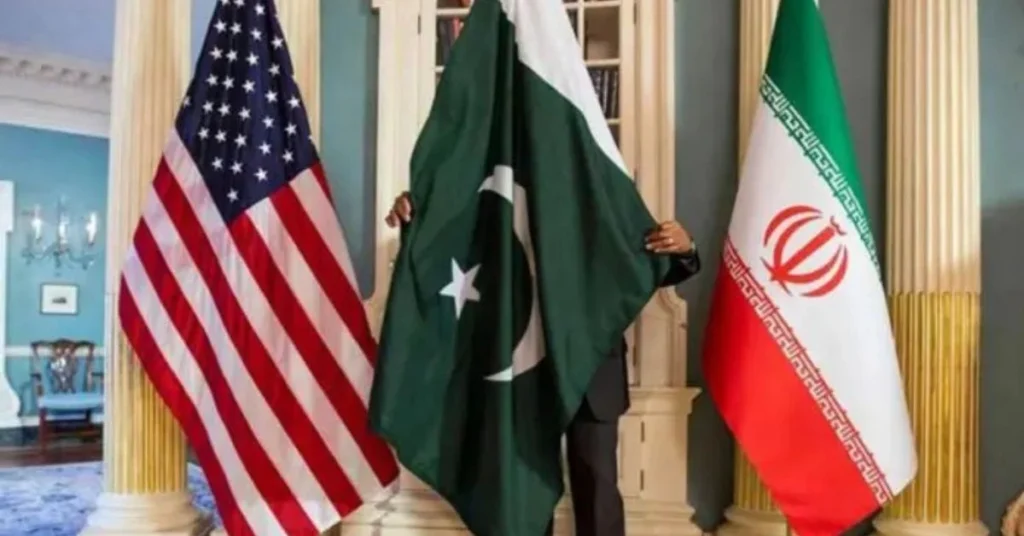
ISLAMABAD (Kashmir English): Former ambassador to the United States and former president of Azad Jammu and Kashmir Masood Khan has hailed Pakistan’s efforts for a peace deal between the United States and Iran as a historic achievement.
According to Kashmir Media Service, Masood Khan in a series of television interviews, following the arrival of senior delegations, including US Vice President J.D. Vance and the Iranian negotiating team, stated that Pakistan has succeeded in persuading long-standing adversaries—the United States and Iran—to engage in direct, face-to-face negotiations in Islamabad.
He emphasized that Pakistan’s role as a behind-the-scenes mediator has been pivotal in transforming an otherwise improbable scenario into reality.
“Even before the war, such engagement was unthinkable. During and after the conflict, it became even more difficult. Yet Pakistan, through sustained diplomatic efforts, made it possible,” he remarked.
Pakistan’s role in securing US-Iran ceasefire
He noted that Pakistan’s intervention was instrumental in securing even a temporary ceasefire and in creating the conditions necessary for both sides to agree to talks.
Islamabad, he added, has now emerged as a trusted venue where complex and sensitive issues—ranging from regional security to maritime governance—can be addressed constructively.
Masood Khan cautioned that despite this progress, expectations should remain measured. “There is no immediate optimism. Both sides have a history of hostility and deep mistrust,” he said, adding that their agreement to come to Islamabad nonetheless reflects pragmatism and a willingness to explore common ground.
He highlighted that both Washington and Tehran have presented extensive negotiating agendas, signaling seriousness about resolving disputes and moving toward a ceasefire framework.
He pointed out that several contentious issues remain on the table, including guarantees of non-aggression, a permanent ceasefire, sanctions relief, nuclear commitments under the Non-Proliferation Treaty, and the governance of the Strait of Hormuz.
He also identified the role of Israel as a critical external factor influencing the negotiations, describing it as “the elephant in the room.”
Masood Khan observed that war fatigue in the United States and the severe toll of conflict on Iran and the broader Gulf region have created incentives for dialogue.
“The region is wounded, and there is a growing realization that continued conflict serves no one’s long-term interests,” he noted.
He further underscored Pakistan’s broader diplomatic outreach, including engagement with regional partners such as Türkiye, Saudi Arabia, and Egypt, as well as coordination with China through a joint framework that helped shape the roadmap.
Concluding his remarks, Ambassador Khan stated that Pakistan has firmly established its credentials as a credible mediator on the global stage.
While acknowledging the complexity of the negotiations ahead, he expressed cautious confidence that Islamabad’s facilitation could help bridge differences and guide the parties toward a workable and peaceful outcome.