
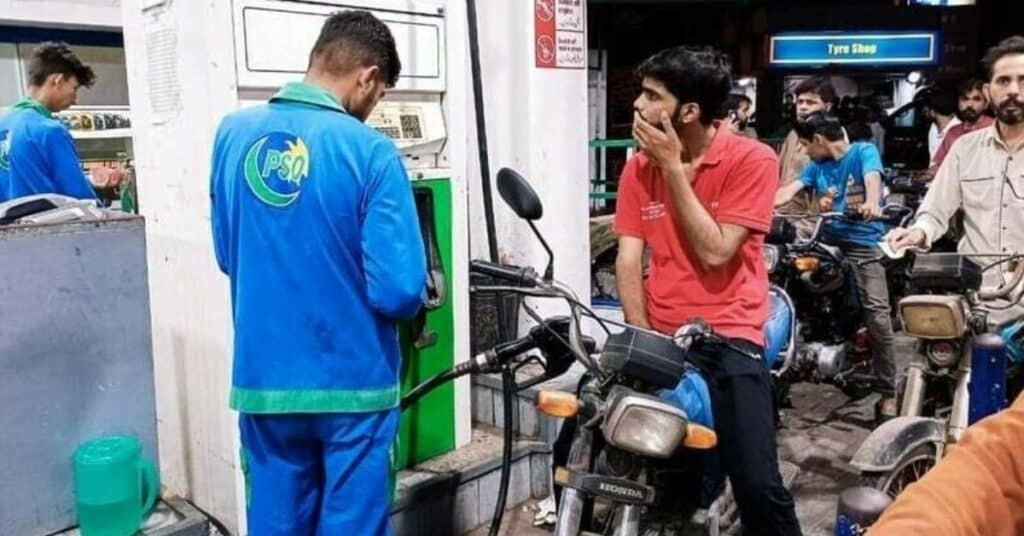
ISLAMABAD (Kashmir English): Prime Minister Shehbaz Sharif has approved the weekly revision of diesel and petrol prices in view of the changing regional situation amid the Iran-US and Israel war, Geo News reported.
Currently, the revision of prices of petroleum products is being done after every fortnight. The federal cabinet gives final approval to the price revision summary submitted by the Oil and Gas Regulatory Authority (Ogra).
A meeting of the Committee on Petroleum Products Stock and Consumption was held under the chairmanship of Prime Minister Shehbaz Sharif, in which the Finance Minister briefed the Prime Minister.
According to sources, the committee submitted recommendations regarding the determination of weekly prices of petroleum products, which were approved by the premier.
Sources said that the Economic Coordination Committee (ECC) will give recommendations regarding the weekly prices of petroleum products. After approval from the ECC, the federal cabinet will give final approval to the summary of petroleum products.
Meanwhile, the proposal of the work-from-home policy and online classes in educational institutions will be presented on Monday to the Prime Minister for final approval.
The Prime Minister has directed the Finance Minister to submit this proposal after consulting the provinces.
Sources say that these measures will lead to effective use of fuel stocks and a reduction in demand to conserve energy amid the possible fuel crisis due to the Iran-US-Israel conflict.
Energy conservation measures
Finance Minister Muhammad Aurangzeb announced the “national action plan” to introduce energy conservation measures to address disruptions to fuel imports.
Sources said that measures such as reduced office attendance, remote work in the corporate and IT sectors, and other initiatives could be implemented starting in March 2026 to reduce energy consumption.
For the corporate sector, the government is exploring the possibility of allowing employees to work online for two days a week.
It was further emerged that the government offices may implement a policy requiring only essential staff to be physically present, with the rest working remotely.
Various proposals, including shared rides for office staff and online services for potential employees, are also being considered to further minimise energy usage.