
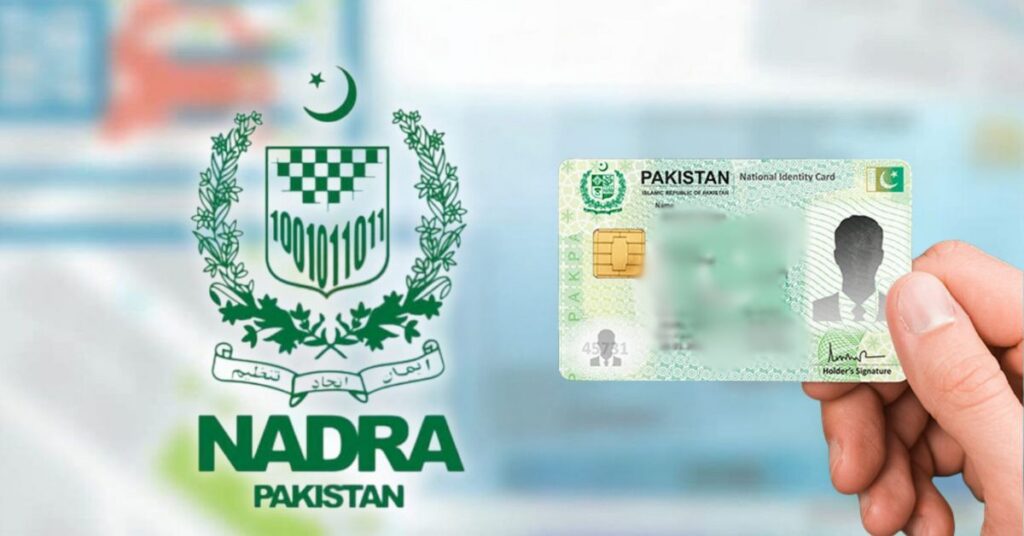
ISLAMABAD (Kashmir English): The Federal Government has officially announced extensive changes to the National Identity Card Rules 2002 and the Pakistan Origin Card Rules 2002, which represent a significant advancement toward establishing a complete digital NADRA identity system.
The amendments, which were issued through S.R.O. 330(I)/2026 and S.R.O. 331(I)/2026 under Section 44 of the NADRA Ordinance 2000, were published in the Gazette of Pakistan on February 24, 2026.
The country is now modernizing its identity documentation system through research that implements QR verification systems, increases its biometric authentication capabilities, and introduces new card designs for different citizen groups.
QR-Codes Now Mandatory
The Quick Response (QR) code now becomes an official security feature through its legal designation as a security and verification element that exists under statutory law. The revised rules define the QR code as a secure machine-readable two-dimensional barcode that contains stored identity information that can be rapidly validated through scanning.
The rules permit the implementation of a QR code or any other technological feature as a substitute for the existing microchip system. The National Database and Registration Authority NADRA will gain the ability to implement new verification methods without needing to update its legal framework multiple times.
The reform introduces a standardized identity card system, which will replace the existing dual system that allows citizens to choose between chip-based Smart National Identity Cards and non-chip identity cards.
All citizens will possess a standardized card that includes advanced verification features because they can use QR technology for their identification needs throughout public and private institutions.
QR-Codes will Enhance Digital ID System
The QR-based system will enhance Pakistan’s Digital ID system through its ability to create uninterrupted data exchange between systems through the National Data Exchange Layer.
The QR-enabled credentials will provide immediate front-end identity authentication at service counters together with back-end authentication which uses secure data exchanges from recognized sources.
The system improves processing speed for both government departments and regulated sectors which leads to better operational performance.
The system will decrease fraud while stopping impersonation and reducing mistakes that happen during manual document processing, thus enhancing transparency and security in service delivery.


