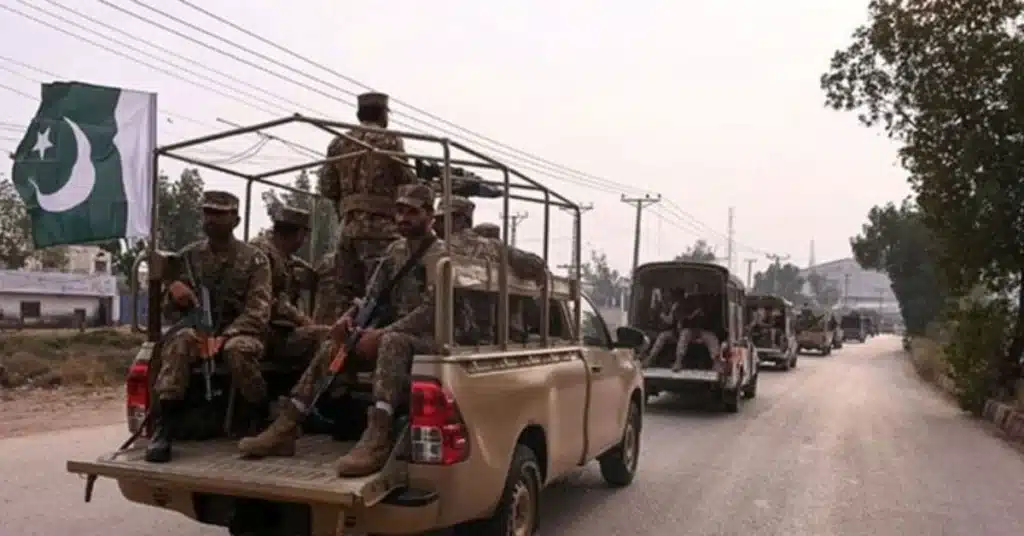

GILGIT (Kashmir English): Gilgit-Baltistan heads to the polls today (June 7) to elect 24 general members for the 33-seat legislative assembly.
Over 950,000 registered voters will cast their ballots across the region’s 10 districts, choosing from a heavily contested field of nearly 400 candidates.
The election was earlier scheduled in January 2026 but later postponed due to severe winter weather.
According to the Election Commission of Gilgit Baltistan, ballot materials have been successfully dispatched to all 1,391 polling stations across the territory.
Authorities have classified 551 polling stations as “highly sensitive” and 349 as “sensitive”.
To maintain law and order, over 5,000 police personnel—including more than 3,000 from the Punjab Constabulary—have been deployed alongside local forces.
The Election Commission of Gilgit Baltistan has also designated District Returning Officers as first-class magistrates to ensure a peaceful and transparent process.
The election comes amid heightened political activity as major political parties, including the Pakistan Peoples’ Party (PPP) and Pakistan Muslim League-Nawaz (PML-N), aggressively campaigned.
Gilgit-Baltistan Assembly
The Gilgit-Baltistan Assembly consists of 33 seats in total, with 24 directly elected, six reserved for women, and three for technocrats.
Meanwhile, section 144 has been imposed in Diamer ahead of polls.
District administration has appealed to citizens to comply with order, warning of strict action against violators.
Security arrangements have been made at the polling stations according to their category.
Of Gilgit’s 253 polling stations, 154 were declared highly sensitive, 48 were categorised as sensitive, and 51 as normal.
In Ghizer, of 207 stations, 69 were declared highly sensitive, 52 sensitive, and 83 normal.
Of Nagar’s 85 polling stations, 18 were declared highly sensitive, 39 sensitive, and 28 normal, while 24 of Hunza’s 88 polling stations were categorised as highly sensitive, 31 as sensitive, and 33 as normal.
In Skardu, out of 208 polling stations, 69 were declared highly sensitive, 51 sensitive, and 88 normal. Of Shigar’s 71 stations, 17 were said to be highly sensitive, 23 sensitive, and 31 normal, while in Kharmang, out of 43 polling stations, 21 were declared highly sensitive, 10 sensitive, and 12 normal.
Similarly, of Ghanche’s 154 polling stations, 26 were categorised as highly sensitive, 39 as sensitive, and 89 as normal, while of 108 polling stations in Astore, 34 were declared highly sensitive, 34 sensitive, and 40 normal.
Finally, of Diamer’s 174 polling stations, 119 were declared highly sensitive, 22 sensitive, and 33 normal.
The Gilgit-Baltistan Assembly completed its five-year tenure in November 2025. Elections, originally scheduled for January 24, were postponed due to severe weather conditions.