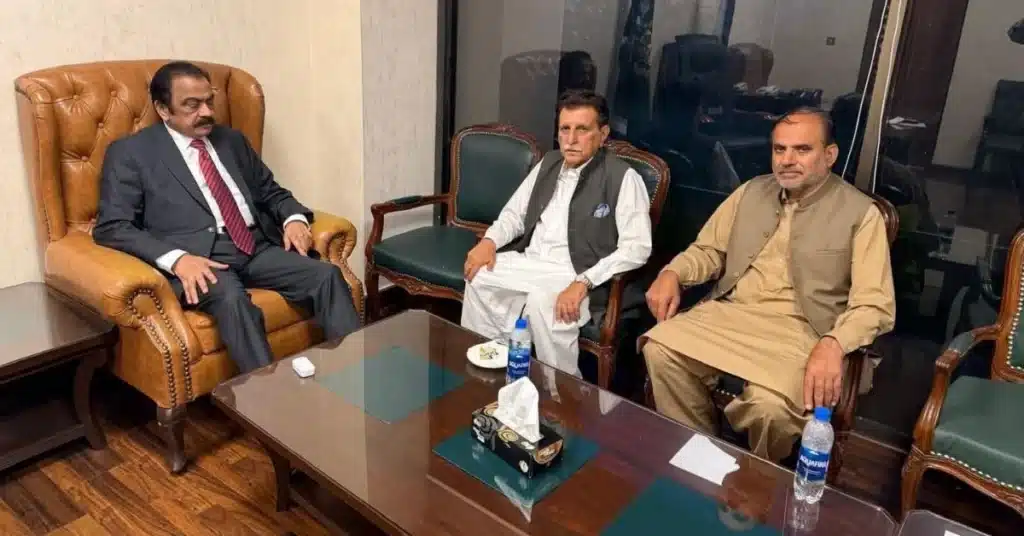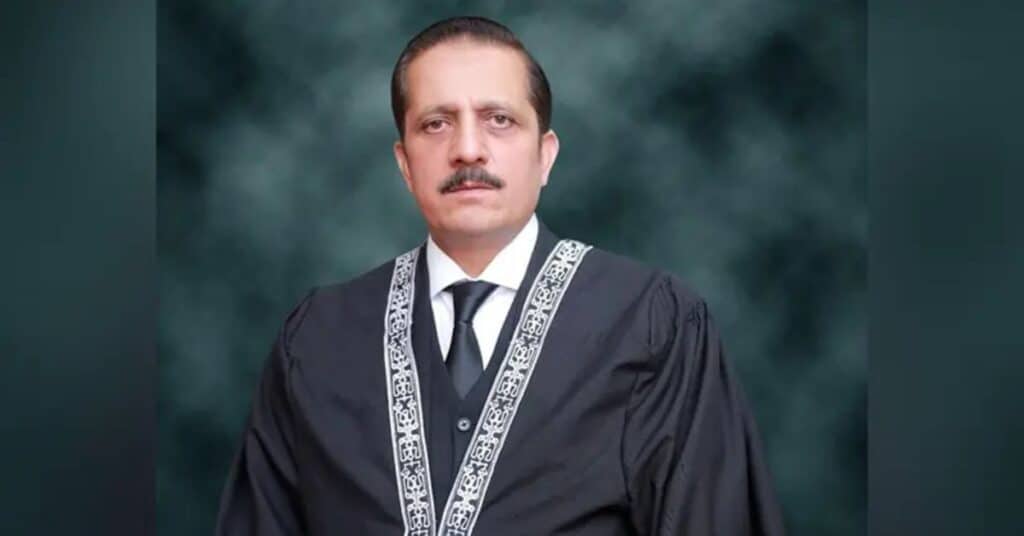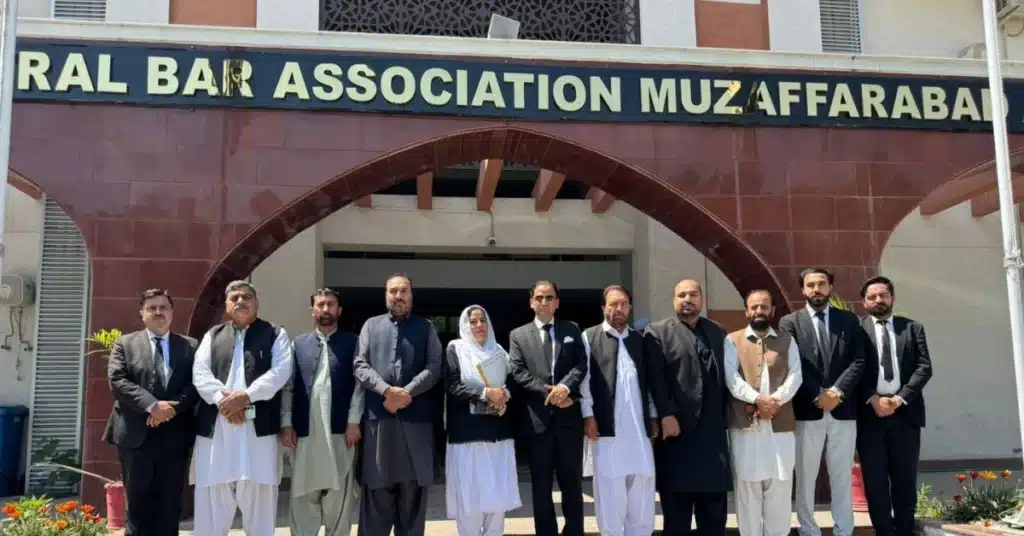

MUZAFFARABAD (Kashmir English): Azad Jammu and Kashmir Prime Minister Chaudhry Anwarul Haq has once again clarified that he had no intention of committing a constitutional massacre of the Legislative Assembly or dissolving the Assembly.
He said that the consensus of his cabinet friends and relatives was that the Assembly should be dissolved, but uprooting the system is not in his nature.
The Prime Minister said that he tried his best to break the status quo, but in this matter, he stuck to his principled stand.
He also said that the fear on which he was reluctant to resign has now been proved. On this occasion, he said that if necessary, he will discuss the issue of no-confidence in the forum and will be ready to defend his political position.
Expressing his feelings, Chaudhry Anwarul Haq said that he had been holding his tongue for two and a half years and now he is free.
He also highlighted the reasons for no-confidence in the Prime Ministers in the past and said that in the past, no-confidence was taken against the Prime Ministers on charges like dishonesty, corruption, bad governance, and revenge, but there is no life in the current no-confidence motion against them.
Clarifying his narrative and the principle of public representation, the Prime Minister said that he is not an accidental political activist and is determined to give the people of Azad Jammu and Kashmir an opportunity to speak openly for freedom of expression.
He further said that he believes in the right of majority rule in a democracy, and his narrative, which was in power, will be the same in the opposition as well.
This stance of Chaudhry Anwarul Haq has come out as a clear message in the political situation of Azad Jammu and Kashmir.
This statement made it clear that the Prime Minister gives top priority to upholding the principled right to popular representation and will not take the path of uprooting the system or dissolving the assembly under any constitutional or political pressure.
This position of his is a strong signal for the protection of political stability and democratic values in the region.