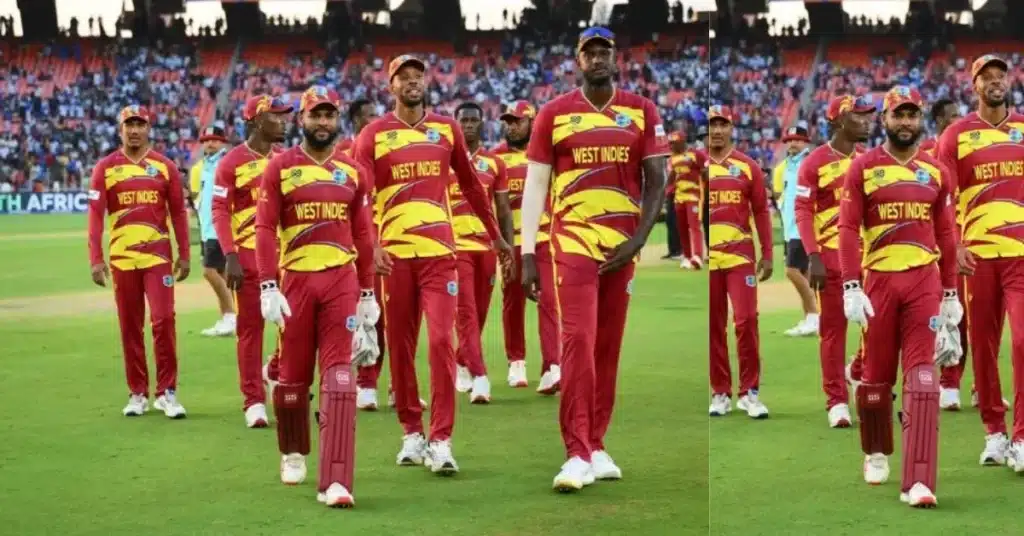
ST. JOHN’S, Antigua And Barbuda (Kashmir English): Two-time champions West Indies will have to fight their way into the next year’s ODI World Cup through the Qualifier after the Caribbean side failed to secure automatic qualification for the third consecutive edition.
West Indies are currently ranked 10th in the ICC ODI rankings. They are unable to break into the automatic qualification places before the September 30 cut-off, despite having two matches against India still to play.
Under the revised qualification system, the top eight teams in the ICC ODI rankings as of September 30, excluding hosts South Africa and Zimbabwe, will qualify directly for the 2027 World Cup.
Afghanistan were able to secure the final automatic qualification berth after defeating Ireland in Belfast, joining defending champions Australia, India, New Zealand, Pakistan, Sri Lanka, England and Bangladesh in the main tournament. South Africa and Zimbabwe will qualify automatically as co-hosts.
West Indies route to the World Cup
For the Caribbeans, however, the route to the global event will once again be more complicated.
Even victories in both games over India in their remaining ODIs would not be enough to move West Indies into the top eight, leaving them with no option but to enter the World Cup Qualifier scheduled for February.
The situation will bring back harsh memories for The Caribbean side, who were forced to take the qualifying route for the previous World Cup as well.
Their campaign in Zimbabwe ended in disappointment when they finished fifth in the Super Six stage and failed to secure a place in the 2023 tournament.
It marked the first time in their history that West Indies failed to qualify for an ODI World Cup.
The winner of the 2027 World Cup Qualifier, whose host is yet to be announced, will secure direct passage to the second round of the World Cup. The teams finishing second, third and fourth will then compete in a Super Series, with the winner of the tri-series also advancing to the second round.
The revised system, however, has attracted criticism from Associate-member nations, with concerns that the pathway provides limited opportunities for emerging teams to reach the global stage.