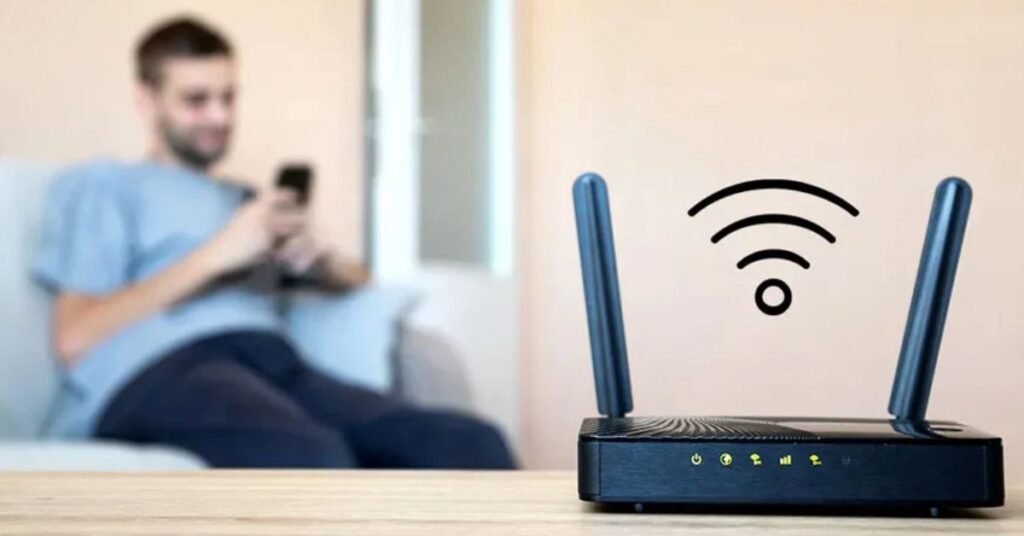
ISLAMABAD (Kashmir English): Experts have said that wrong router placement might be one of the most common reasons behind dropped connections and weak signals.
Wi-Fi routers wouldn’t always cover every corner of a home, especially in multi-story structures. Walls, furniture, and even household objects can block or weaken signals, creating dead zones for internet where the speed drops or connection fails.
Instead of immediately upgrading the router, one should identify and review router placement to stabilize network and improve coverage.
Tips to enhance Wi-Fi coverage
Location selection
The best location for a Wi-Fi router is an open, central point of the house. This allows radio waves to travel evenly in all directions, ensuring better coverage across rooms and floors.
On the other hand, placing routers near thick walls, inside cabinets, drawers, or enclosed spaces can restrict signals.
Experts also recommend keeping routers on elevated points to prevent obstruction from furniture and floors and to reduce dust buildup.
Basements are a bad choice
Putting a Wi-Fi router in the basement can significantly weaken signal strength.
Basements are often built with dense materials such as concrete, which absorb Wi-Fi signals and convert them into heat.
Since basements sit at the lowest point of a home, upper floors receive weaker signals, increasing the risk of dead zones and unstable connections.
Electronic interference
Router placement is not the only factor affecting performance. Electronic devices such as microwave can also interfere with Wi-Fi signals, especially if the router operates on the 2.4 GHz frequency band.
Alongside microwaves, electromagnetic interference can also come from Bluetooth devices, wireless headphones, speakers, and even fluorescent or LED lighting.
Router placement is the most crucial factor that can improve Wi-Fi stability. Being mindful of nearby electronics and choosing the right location can help eliminate dead zones and deliver a more reliable internet experience.