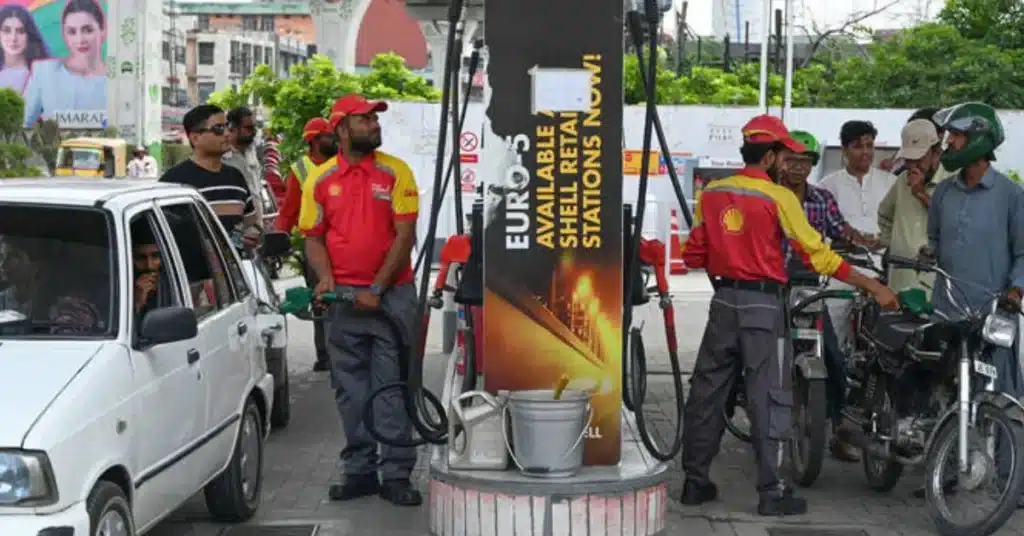

ISLAMABAD (Kashmir English): As the government of Pakistan has recently announced a massive hike in petrol prices across Pakistan, the only question that lingers in middle class Pakistani’s is that in how much their car fuel tank will be full now.
Last night, the government announced an increase of Rs138 per litre of petrol, adding a huge burden on Pakistani citizens as inflation increases day by day.
The price range in which your fuel tank can be filled totally depends on the car model and its fuel storage capacity. Many people are switching to E-bikes and E-vehicles due to this very reason.
However, owning an EV itself requires a lot of money, which most of Pakistani’s can not afford.
The recent comparison demonstrates how the new fuel price increase directly affects car owners through the increased expense of refueling different vehicle types.
The data shows petrol prices have increased from Rs. 321.7 per litre to Rs. 458.40 per litre, which results in higher total fueling costs. The analysis shows that owners of small cars like the Suzuki Alto must now spend Rs. 12,377 for a complete tank, but this amount used to cost them Rs. 8,672, which results in a price increase of Rs. 3,705.
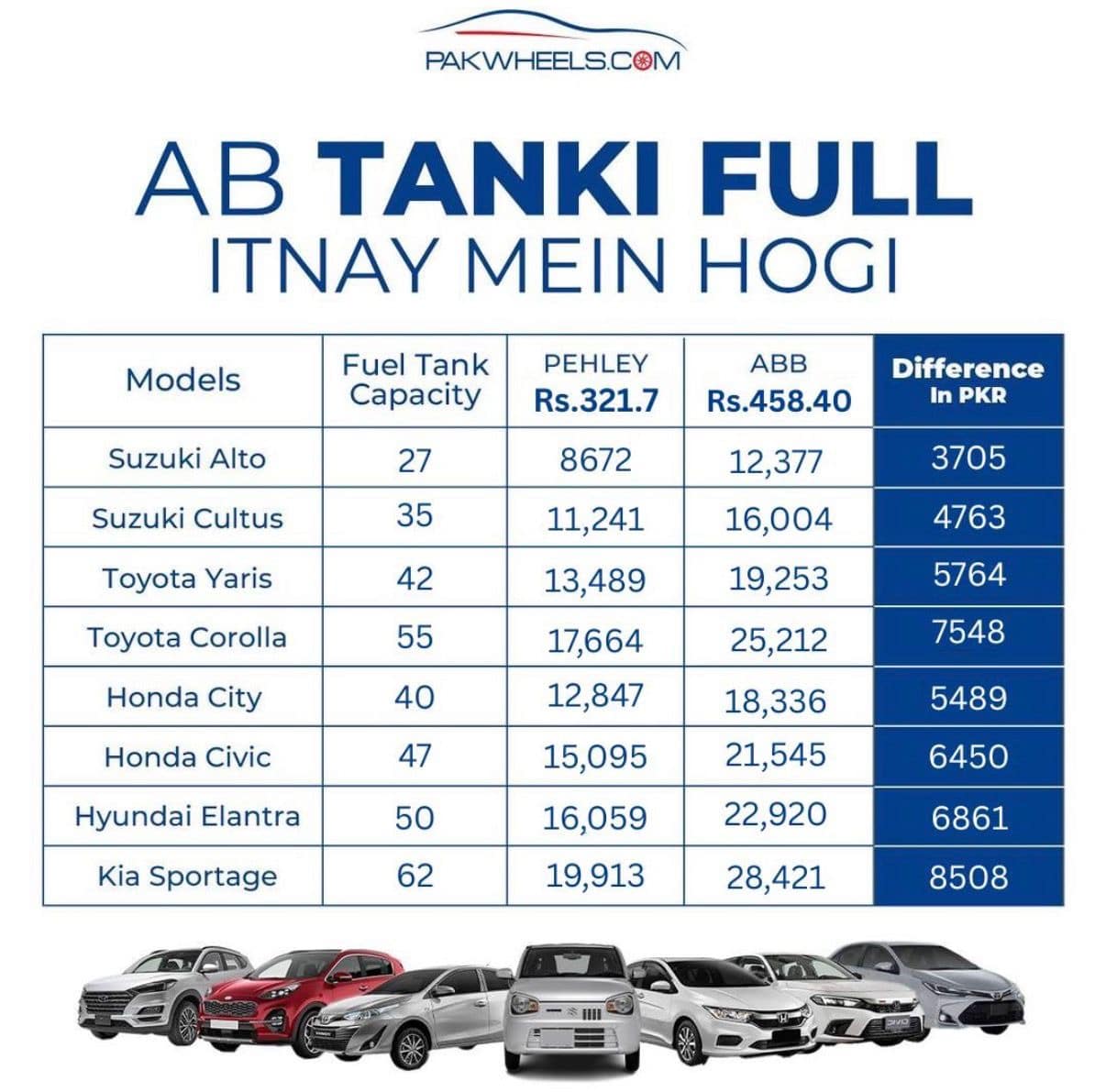
The cost of refueling a Suzuki Cultus has now reached more than Rs. 16,000, which shows an increase of Rs. 4,763. Mid-range sedan owners must deal with significant financial pressure.
The cost of filling a Toyota Yaris has risen by Rs. 5,764, while a full tank for the Honda City now costs Rs. 18,336, which includes an increase of Rs. 5,489. The effect on premium automobiles reaches exceptional levels.
The cost to fill a Toyota Corolla has reached more than Rs. 25,000 after experiencing a price increase of Rs. 7,548. The cost to refuel a Honda Civic has reached Rs. 21,545 per tank, which shows an increase of Rs. 6,450.
The cost to refuel SUVs such as the Kia Sportage now stands at Rs. 28,421, which represents an exceptional increase of Rs. 8,508. The experts from the industry state that the current fuel cost increases will create economic difficulties for households, which will lead to inflation growth because higher transportation costs result in increased prices for all goods and services.
The data shows that both consumers and transporters are worried about rising petroleum prices because the prices keep increasing without any signs of stopping.