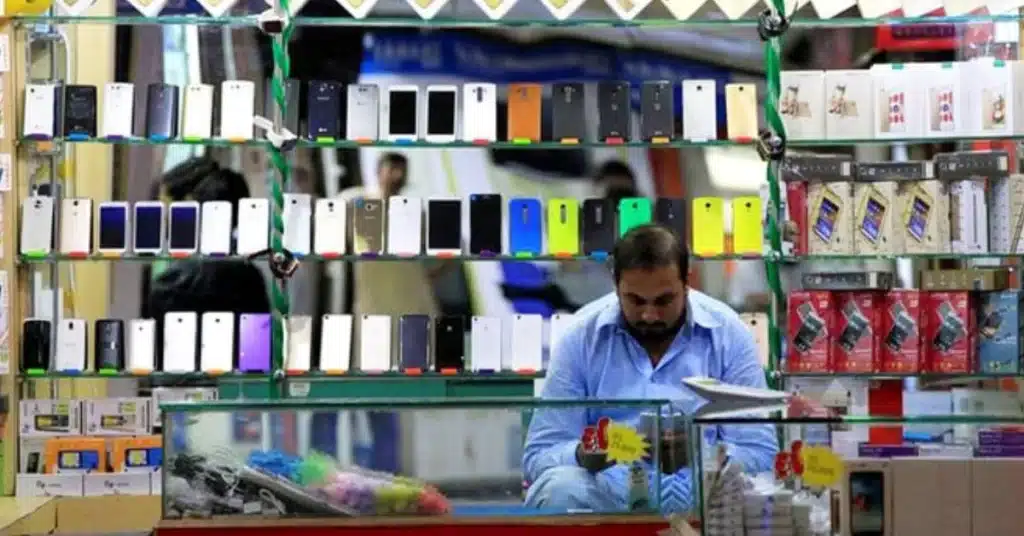
ISLAMABAD (Kashmir English): The government has drastically reduced the advance income tax on a specific category of imported mobile phones. This major cut applies specifically to devices priced between $101 and $200.
Authorities want to fine-tune the broad taxation of cell phone services. Thus, this will be a welcome relief to both importers and consumers in this price range.
The Finance Minister recently gave this information in reply to the Senate in writing. The government cut the advance income tax on these kinds of imported mobiles by 89.2%, the report said. The tax rate decreased from Rs. 930 to Rs. 100.
Moreover, government has reduced mobile handset tax by 66%. This particular charge was reduced from Rs. 600 to Rs. 200. As a result, the importers and buyers will save Rs. Just $400 on the handset for the handset levy alone.
The overall sales tax base stays exactly where it is, although sales are cut dramatically.
The Sale Tax Act of 1990 puts in place a list of fixed rates on other services, which consumers are required to pay. For example, if a mobile SIM is activated in the name of a customer, a standard sales tax is levied on it of Rs. 250 per SIM.
Additionally, there are no tax changes for devices in the $101 – $200 price range. The sales tax still applies to imported cellular mobile phones up to 18% even though the prices of those mobiles are not more than $500.
For those who buy imported devices with a higher price tag, premium devices priced over $500 are subject to a significantly higher rate of 25%.
| Mobile Category / Service | Applicable Tax Rate |
| SIM Activation | Rs. 250 per SIM |
| Imported Phones (Up to $500) | 18% Sales Tax |
| Imported Phones (Above $500) | 25% Sales Tax |
| Locally Supplied Phones | 18% Sales Tax |
The recent tax cuts clearly reduce the financial burden on imports. However, several important questions remain unanswered.
The official Senate reply did not provide any estimates regarding the overall revenue impact of these reductions.
More importantly, the government did not indicate whether these lower levies will actually translate into equivalent price cuts for everyday consumers in the market.