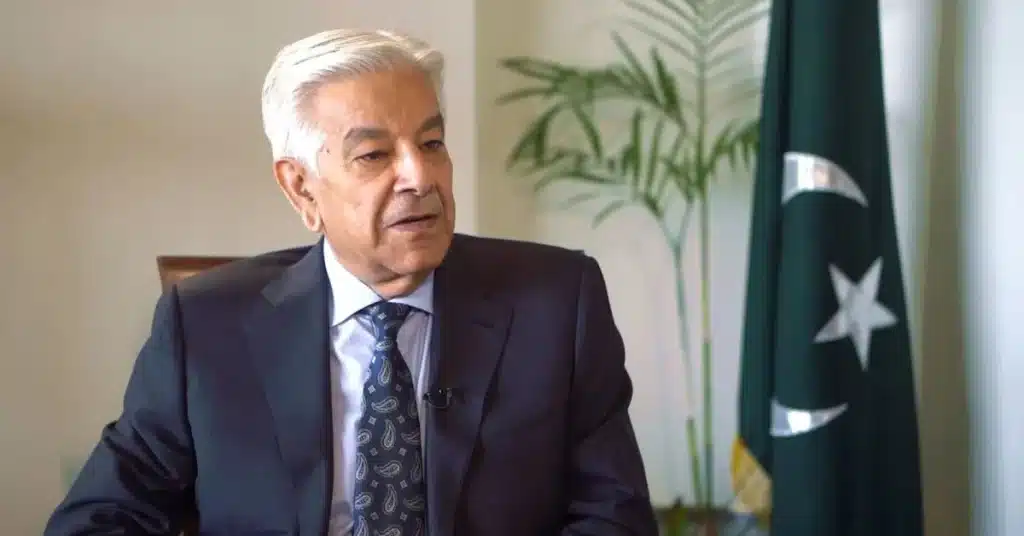
ISLAMABAD: Defence Minister Khawaja Asif has clarified that no defence agreement was being negotiated in Tehran and that Field Marshal Asim Munir’s visit was aimed at promoting regional peace and facilitating reconciliation between the parties involved.
Speaking in the National Assembly, Asif said the activities undertaken in Tehran were unrelated to the affairs of the Ministry of Defence.
He stated that Field Marshal Asim Munir had played a significant role in promoting peace and dialogue following the regional conflict that began last year. According to the defence minister, the visit was intended to ease tensions and create opportunities for peaceful engagement.
Asif also noted that Pakistan already has a defence agreement with Saudi Arabia, while similar agreements have been concluded with Qatar, Türkiye and Indonesia. He stressed that the diplomatic efforts in Tehran were separate from these defence arrangements.
Responding to questions in the National Assembly about his absence from Tehran, the minister explained that his presence was not required because the activities taking place there did not fall within the Ministry of Defence’s jurisdiction.
He reiterated that the purpose of the Tehran visit was to support regional stability and reconciliation rather than negotiate new defence agreements.
Defence Minister Khawaja Asif has remarked that Maulana Fazlur Rehman’s politics revolve around a religious platform, adding that other political parties also have the right to make decisions according to their own political interests and circumstances.
Speaking in the National Assembly, Asif said Fazlur Rehman had chosen his own political approach, while other parties were equally entitled to pursue their respective strategies.
The defence minister emphasised that political differences should be handled with maturity and mutual respect, urging leaders to consider their own past decisions before criticising others.
Fazlur Rehman’s Politics Revolve Around Religion
Referring to Fazlur Rehman’s political history, Asif recalled his tenure as chairman of the Kashmir Committee during General Pervez Musharraf’s era and questioned his contributions to the Kashmir cause during that period.
Asif also pointed out that political alliances and alignments continued to evolve, with parties making decisions based on their own interests. Referring to Pakistan Tehreek-e-Insaf (PTI), he said new political alignments were emerging.
He stressed that political disagreements should not undermine mutual respect among parties and their leaders.