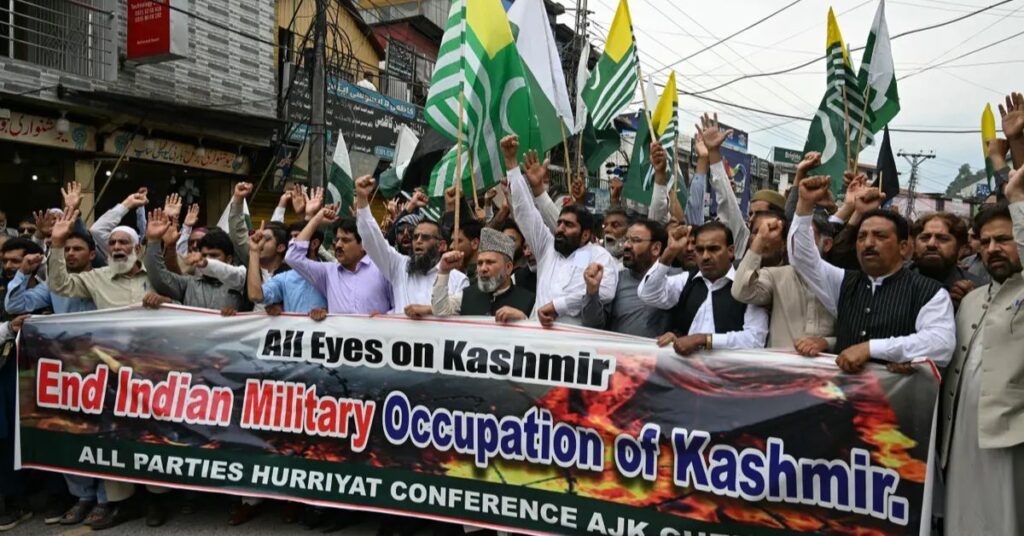
SRINAGAR (Kashmir English): The All Parties Hurriyat Conference (APHC) has warned that the grim situation in Indian illegally occupied Jammu and Kashmir (IIOJK) demands immediate global attention before it spirals out of control.
According to Kashmir Media Service, APHC spokesman Advocate Abdul Rashid Minhas in a statement issued in Srinagar said the Modi regime is determined to crush the Kashmiri people’s legitimate quest for freedom, through brute force.
He highlighted that Kashmir remains a dangerous nuclear flashpoint in South Asia and stressed that time is running out for international action.
Ignoring the Kashmir dispute, he said, serves no one’s interests, as continued delay in resolving the issue carries serious global consequences.
Minhas emphasized that Kashmir is not India’s internal matter but a nuclear flashpoint in South Asia.
He warned that the militaristic policies of the Modi government are placing regional peace at grave risk and that an unresolved Kashmir dispute could ignite a nuclear crisis.
He called upon the United Nations and the international community to intervene to resolve the Kashmir dispute and avert a potential regional catastrophe.
Use of draconian laws in Kashmir
He deplored that India is using might-based policies against the oppressed people of Kashmir under draconian laws in Kashmir to suppress their legitimate demand for a plebiscite.
The spokesman said Indian military, paramilitary, and police personnel, enjoying unbridled powers under black laws including the Armed Forces Special Powers Act, Disturbed Areas Act, Public Safety Act, and Unlawful Activities (Prevention) Act, are perpetrating war crimes amounting to crimes against humanity.
“Indian forces are committing gross human rights violations, including extrajudicial executions, killings, arbitrary arrests, torture, cordon-and-search operations, house raids, property attachment, and molestation of women, all with complete impunity,” he said and added, “These acts are aimed at creating an atmosphere of fear among the masses in occupied Kashmir.”