
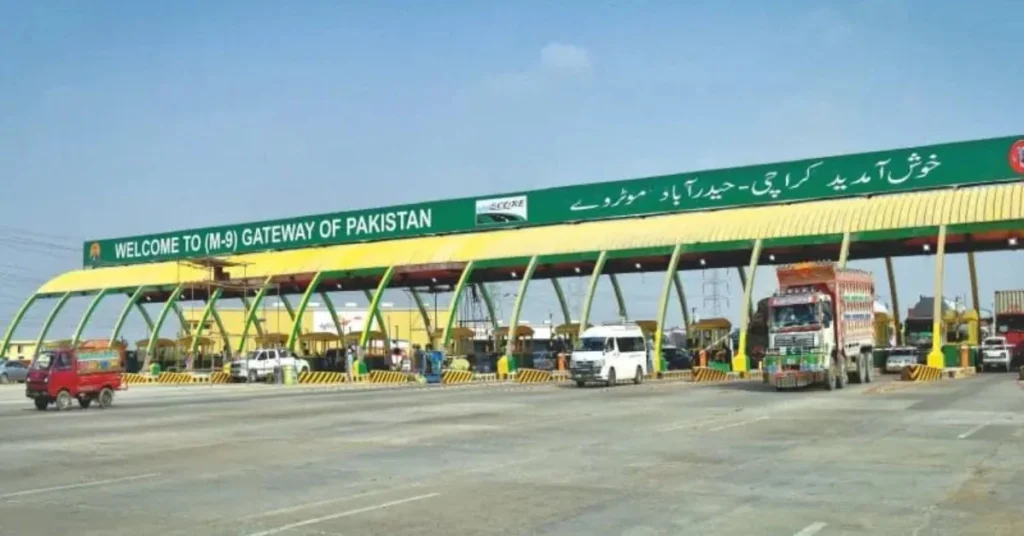
ISLAMABAD (Kashmir English): The authorities have significantly reduced speed limits for vehicles on motorways and national highways in order to save fuel.
The decision is part of the government’s austerity measures and fuel conservation, according to a handout issued by the National Highways and Motorway Police (NHMP).
The government in recent days, announced a host of austerity measures to conserve fuel in view of the global fuel crisis triggered by the US-Israel aggression on Iran.
According to the motorway police, the step was taken in light of the instructions of the prime minister to ensure efficient use of energy and to encourage fuel savings.
The speed limit for cars and light transport vehicles (LTVs) has been reduced to 100 kilometres per hour from 120km/h on motorways. Meanwhile, the speed limit for passenger service vehicles (PSVs) and heavy transport vehicles (HTVs) on motorways has been reduced from 110 km/h to 90 km/h, according to the NHMP press release.
Speed limit on highways
On national highways, the speed limit for cars and LTVs has been reduced from 100km/h to 80km/h. For PSVs and HTVs, the speed limit has been reduced from 80km/h to 65km/h, it added.
The statement further said that the NHMP had “launched a nationwide awareness campaign regarding the revised speed limits to ensure effective implementation.
Last week, the government, in an effort to save energy, announced a host of measures aimed at fuel conservation, including a 50 per cent cut in fuel allowance for official vehicles.
It was also decided that 50pc of staff in the public sector would work from home; however, those providing essential services are exempt.
Lower speed limits save fuel primarily by reducing aerodynamic drag, which increases exponentially with speed.
Aerodynamic Drag: Air resistance increases significantly at higher speeds, requiring substantially more energy and fuel to move the vehicle.
Driving at 90–100 km/h instead of faster speeds reduces engine load, often improving fuel efficiency by 7%–14%.
Lower speeds not only reduce fuel consumption but also improve safety by reducing the severity of accidents.