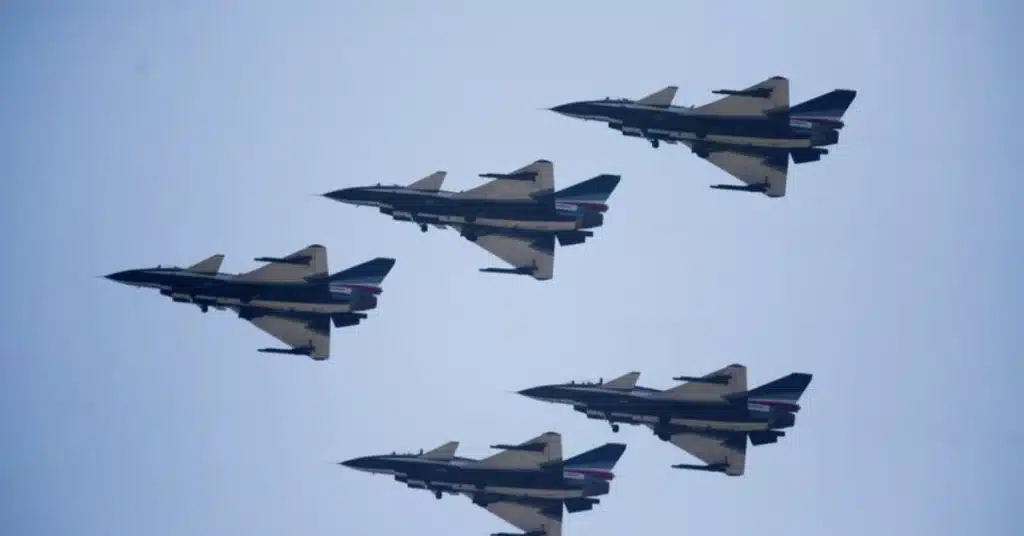
BEIJING (Kashmir English): China’s AVIC Chengdu Aircraft, maker of the fighter jets J-10C that rose to fame in the India-Pakistan brief war in 2025, posted record profit last year and saw first-quarter sales nearly double.
In early May last year, long-standing tensions between the two nuclear-armed neighbours boiled over following an attack in Pahalgam, Occupied Kashmir, on April 22.
In the ensuing clash, Ma’raka-e-Haq or Operation Bunyan-um-Marsoos, the Pakistan Air Force reportedly deployed its newest Chinese-made assets.
J-10C vs. Western-built hardware
The defining moment of the story occurred on May 7, 2025, when Pakistan Air Force claimed its Chengdu J-10CE fighters—equipped with advanced PL-15 missiles and AESA radar—successfully engaged and shot down multiple Indian Air Force jets.
Pakistan stated it downed five to six Indian aircraft, including at least three French-made Rafale jets.
India, however, denied these losses, though reports from U.S. officials and Chinese state media later surfaced, lending weight to the J-10C’s combat success.
This was the first time Chinese domestic technology had faced off against top-tier Western-built hardware in active combat and emerged victorious.
Within a week of the clash, shares of AVIC Chengdu surged by 40%. The company’s market capitalization soared by over $7.6 billion (approx. 55 billion yuan).
Conversely, shares of Dassault Aviation, maker of the Rafale, took a hit as investors reassessed the invincibility of Western platforms.
By early 2026, the combat-proven status of Chengdu’s jets translated into unprecedented commercial success. In the first quarter of 2026 alone, sales nearly doubled (rising 80%) compared to the previous year.