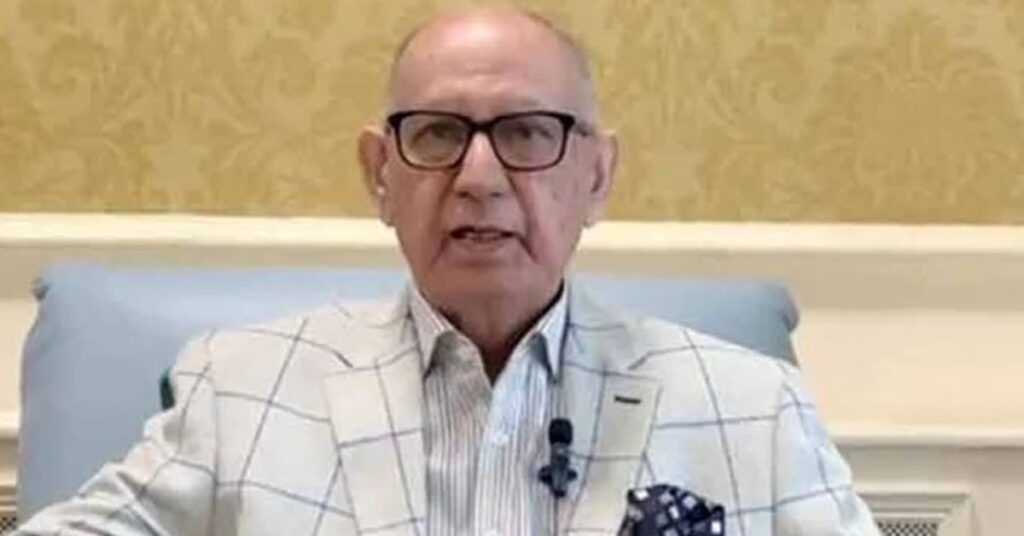
ISLAMABAD (Kashmir English): Irfan Siddiqui’s real name was Irfan-ul-Haq Siddiqui, but he was more widely known by his pen name Irfan Siddiqui.
He was a member of the Senate of Pakistan from Pakistan Muslim League-Nawaz and the Chairman of the Senate Standing Committee on Foreign Affairs.
Irfan Siddiqui was born on December 25, 1949, in Dhok Badhal, a village on Chak Beli Khan Road, a suburban area of Rawalpindi.
He received his early education from the village school, and later pursued higher education from the Urdu Department of Punjab University.
Irfan Siddiqui began his professional life as a primary school teacher, later progressing to high school and then being appointed as an Urdu lecturer at Sir Syed College Rawalpindi.
After a long career as a teacher, he entered the field of journalism and began writing columns for various newspapers.
In 1997, when Pakistan Muslim League-Nawaz came into power, Irfan Siddiqui was appointed as the Press Secretary and speechwriter to the then President of Pakistan, Rafiq Tarar, which marked the beginning of his association with Pakistan Muslim League-Nawaz.
During Nawaz Sharif’s government, Siddiqui served as his special assistant.
Irfan Siddiqui belonged to a middle-class family
Irfan Siddiqui belonged to a middle-class family with a strong tradition of education.
Former Islamabad High Court judge Justice (retd) Shaukat Aziz Siddiqui was his maternal cousin, and Naim Siddiqui, a former prominent leader of Jamaat-e-Islami and author of several books, was also his cousin. Irfan Siddiqui’s father was also an intellectual figure of his time.
Irfan Siddiqui held a unique position in political and intellectual discussions due to his gentle, refined, and dignified writing style. He was among those writers who brought dignity, and seriousness to Pakistani journalism.
In May 2024, Senator Irfan Siddiqui published a collection of his Urdu columns titled “PTI and Pakistan: From Cipher to Final Call” in book form.
He formed the National Curriculum Committee, worked on educational reforms, and strengthened government contacts with academic and intellectual circles.
Subsequently, he was elected as a member of the Senate of Pakistan by the Pakistan Muslim League-N.
As a Senator, he remained active in matters related to national legislation, curriculum development, and social policy. For his services, he was also awarded Pakistan’s highest civilian honour, Hilal-e-Imtiaz.