
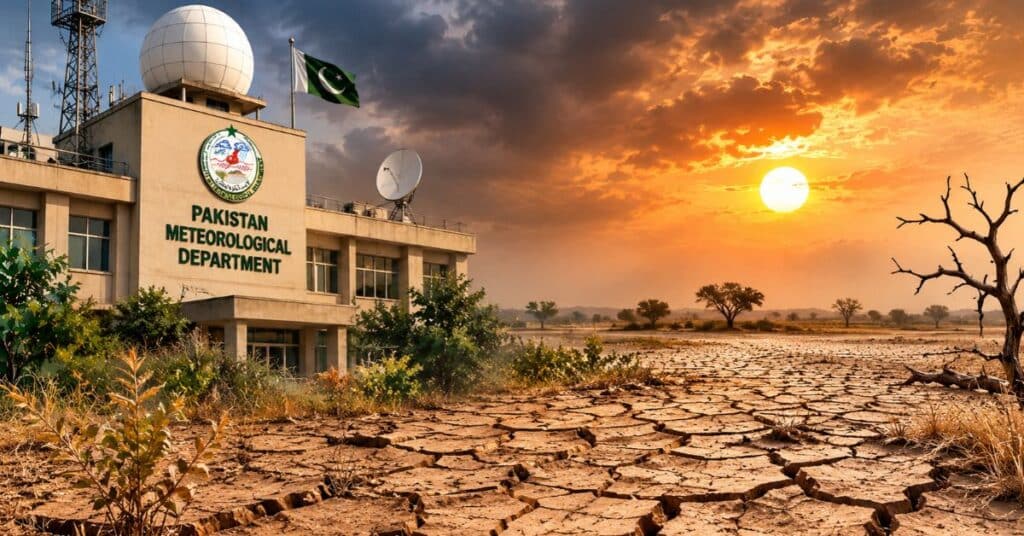
ISLAMABAD (Kashmir English): The Pakistan Meteorological Department (PMD) has warned of a possible worsening drought situation in Sindh, Balochistan and southern Punjab over the next three months due to a continued decline in rainfall.
According to the department, Sindh and Balochistan have received below-normal rainfall from July to November.
In a Drought Watch issued on Friday, the PMD’s National Drought Monitoring and Early Warning Centre (NDMC) advised provincial governments and relevant authorities to take precautionary measures against emerging mild drought conditions.
It warned that below-normal rainfall between December 2026 and February 2027 could further aggravate the situation.
As per the document, Sindh recorded 90 per cent less rainfall than usual in September, while rainfall remained 100 per cent below normal in October. The province received 99 per cent less rainfall than average between November 1 and 20.
In Balochistan, rainfall was 80 per cent below normal in October, while the province recorded a 79 per cent shortfall during the first 20 days of November.
The rainfall shortage could affect Rabi crops, particularly wheat, reduce soil moisture and increase pressure on groundwater reserves.
Families dependent on rain-fed agriculture and livestock are also considered at greater risk. The department has advised provincial governments to identify areas and communities vulnerable to drought.
It clarified that the drought alert is a precautionary measure and no emergency has been declared. The next review of the situation is scheduled for December 5.
The Met Office has urged local authorities to closely monitor the evolving drought situation in the province through the District Coordination Committees, ensuring the activation of early warning systems and effective community-level awareness and
information dissemination.
“Identify vulnerable communities and prepare beneficiary lists to enable targeted support and the timely implementation of response measures,” the department advised.
It also urged the implementation of water conservation practices at the farm and community levels, such as mulching, efficient
irrigation techniques, and judicious water use, to optimize available water resources.
“Conduct drought assessments, update livestock movement and water source maps, and mobilize veterinary health services and feed support at the district level to safeguard livestock and livelihoods,” the PMD added.