
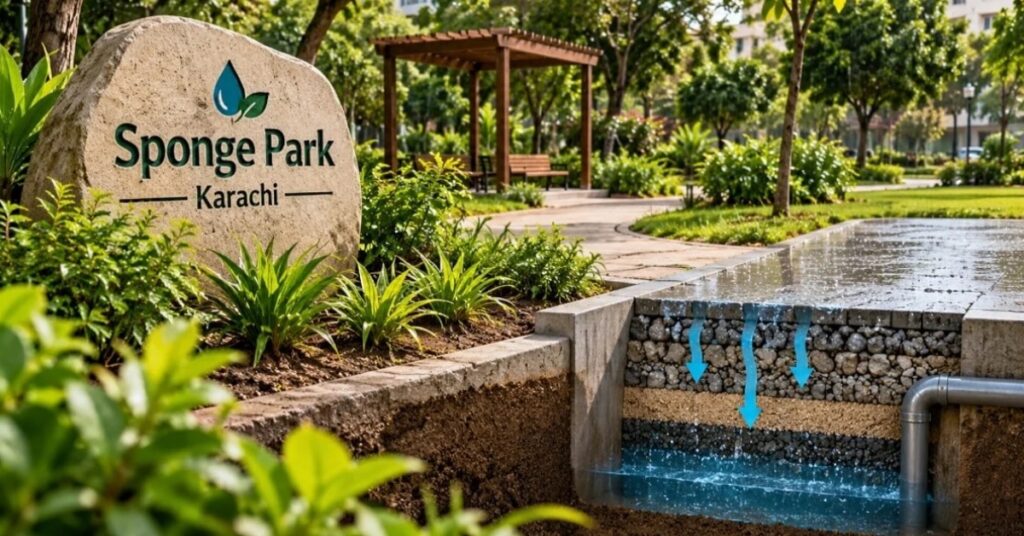
KARACHI (Kashmir English): Karachi has inaugurated Pakistan’s first experimental sponge park at Jamali Park in Gulberg Block 2, introducing a new approach to rainwater conservation, groundwater recharge and urban flood management.
The project aims to collect, filter and reuse rainwater instead of allowing it to flow directly into drainage systems. It is designed to conserve water, replenish underground freshwater reserves and reduce pressure on the city’s drainage network during heavy rainfall.
Developed by WWF-Pakistan in collaboration with Gulberg Town Municipal Corporation and private-sector partners, the park features a filtration system that collects rainwater as well as water from a nearby mosque.
The collected water passes through several layers of natural and filtration materials, including gravel, sand, silica, activated carbon, biochar and zeolite. After filtration, it is stored underground or in tanks for use in irrigation.
Naim Ashraf Raja, Director of Biodiversity at the Ministry of Climate Change, said such initiatives could help replenish underground freshwater reserves and address potential water shortages in the future.
Beyond water conservation, the park also promotes urban greenery and biodiversity. Residents are being encouraged to plant indigenous species, including tamarind, almond, peepal and gulmohar trees. Dedicated spaces for butterflies and other biodiversity have also been incorporated into the project.
Sponge parks are designed to absorb and store rainwater, reducing the volume of water entering urban drainage systems. The approach can help ease pressure on drains, support groundwater recharge and lower the risk of urban flooding.
If the experiment proves successful, the model could be replicated in other parts of Karachi. However, its long-term effectiveness will depend on local soil conditions, groundwater quality and regular maintenance of the filtration system.