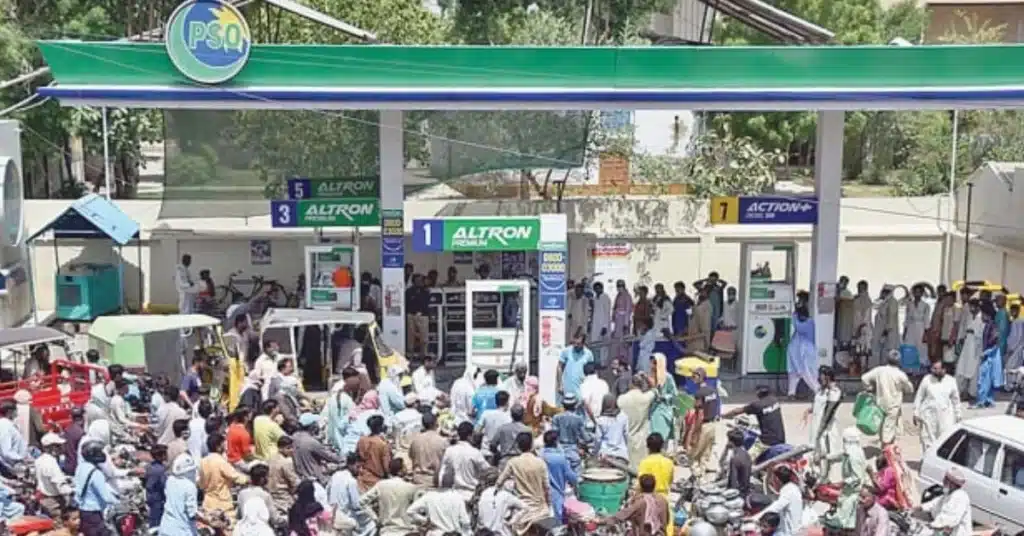
ISLAMABAD (Kashmir English): Federal Information Minister Attaullah Tarar has announced that the government’s fuel relief programme for motorcycle, rickshaw and small car owners will continue, revealing that Rs27 billion has so far been provided in relief through the scheme.
Speaking about the government’s fuel relief measures, Tarar said Prime Minister Shehbaz Sharif had directed authorities to prevent an increase of Rs15 per litre in petrol prices.
He said the prime minister’s vision from the beginning had been to minimise the financial burden on the public and provide relief amid challenging economic conditions.
The information minister maintained that Pakistan was not facing any fuel shortage and that the country’s petroleum requirements were being met.
He added that ongoing wars had affected economies worldwide, with Pakistan also experiencing their economic impact. However, he said the country’s economic indicators remained positive despite these challenges.
Tarar said the fuel subsidy programme was continuing successfully, providing financial relief to motorcycle and rickshaw owners as well as small car users.
He further stated that the government was making efforts to restore peace and that conditions would gradually return to normal once stability was achieved.
New Petrol Pricing Formula for Refineries
Separately, the federal government has approved a revised petrol pricing mechanism under which financial benefits arising from the difference between import and refinery prices will be passed on to consumers through reductions in petrol prices.
According to the Petroleum Division, the federal cabinet has approved the new mechanism, directing oil refineries to deposit the price difference between imported petrol and the prescribed refinery price into the national exchequer.
The government has decided that the amount collected through this arrangement will be transferred to consumers in the form of lower petrol prices.
Under the revised mechanism, refineries will maintain the premium, other costs and customs duty components at the levels prevailing on March 7, 2026, for the next 30 days.
The date has been adopted as the pre-war benchmark for the Iran-US conflict.
The difference between import and refinery prices will be collected through the petroleum levy, with an equivalent amount passed on to consumers through a reduction in petrol prices.
The revised formula aims to ensure that the financial benefits generated through the pricing adjustment reach consumers rather than remaining with oil refineries.