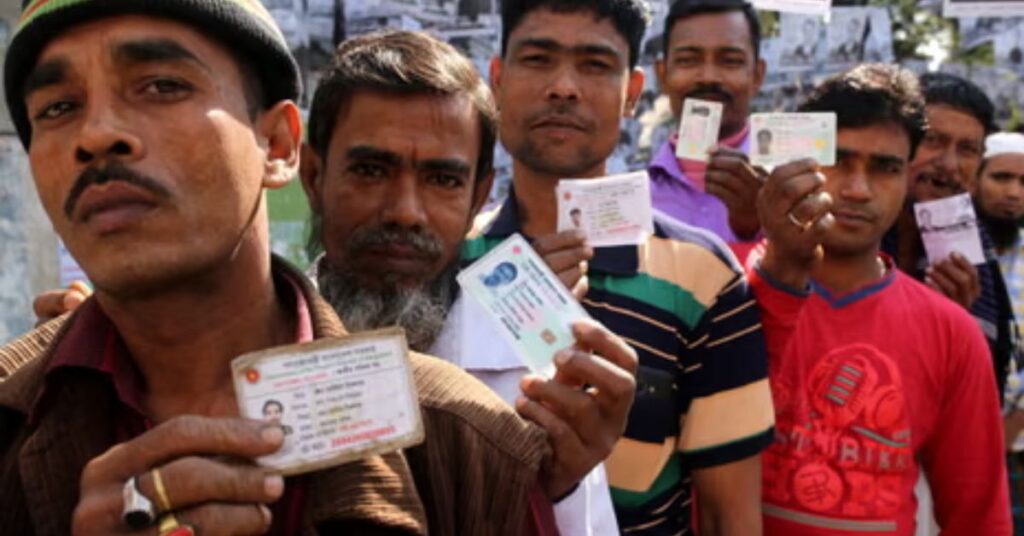
DHAKA (Kashmir English): Bangladesh heads to the polls tomorrow (February 12) in what many are calling the country’s first truly competitive elections in over a decade.
With former Prime Minister Sheikh Hasina Wajid ousted and her party Awami League banned, Gen Z and youth voters are playing a decisive role in shaping the country’s political future.
For years, the country’s elections were dominated by Hasina’s Awami League, with opposition parties sidelined or boycotting the vote.
Following 2024 mass protests and the ousting of former PM Hasina, the country’s political landscape has shifted dramatically.
Led by Tarique Rahman, the Bangladesh Nationalist Party (BNP), is widely expected to secure a parliamentary majority, amid a mounting challenge by Jamaat-e-Islami coalition, bolstered by a Gen Z-driven movement.
This exercise marks the first competitive election since 2009, ending a 15-year period of near one-party dominance.
According to the data, roughly a quarter of the electorate comprises voters under 30, making their participation critical. Young voters seem more focused on issues like tackling corruption, high living costs, and job creation rather than showing interest in ideological or religious issues.
The South-Asian nation faces pressing economic challenges, including slowing investment, high inflation, and growing dependence on international financing from the IMF and World Bank.
Voters are preferring leaders who demonstrate competence, accountability, and the ability to restore economic stability.
Streets are adorned with campaign posters featurin BNP, Jamaat, and several independent candidates across capital Dhaka and other major cities.
In a sharp contrast with past elections dominated by Awami League’s “boat” symbol, political workers are busy in political rallies, party songs, and public debates.
About 15 million expatriate Bangladeshis will vote by post for the first time, reflecting the election’s broad national and global significance.
Bangladesh elections
Bangladesh elections have often been turbulent. Since independence in 1971, the country has experienced periods of military rule, contested polls, and political crackdowns.
1973: First post-independence election, dominated by Awami League.
1979: BNP wins its first parliamentary majority.
1991: ‘Free and fair’ elections restore parliamentary democracy.
2014 & 2018: Awami League secures supermajorities amid opposition boycotts.
2024: Student-led protests oust Hasina, leading to the current caretaker government.
Bangladesh faces a defining moment on February 12 as it seeks to restore its democratic process and ensure long-term political stability.