
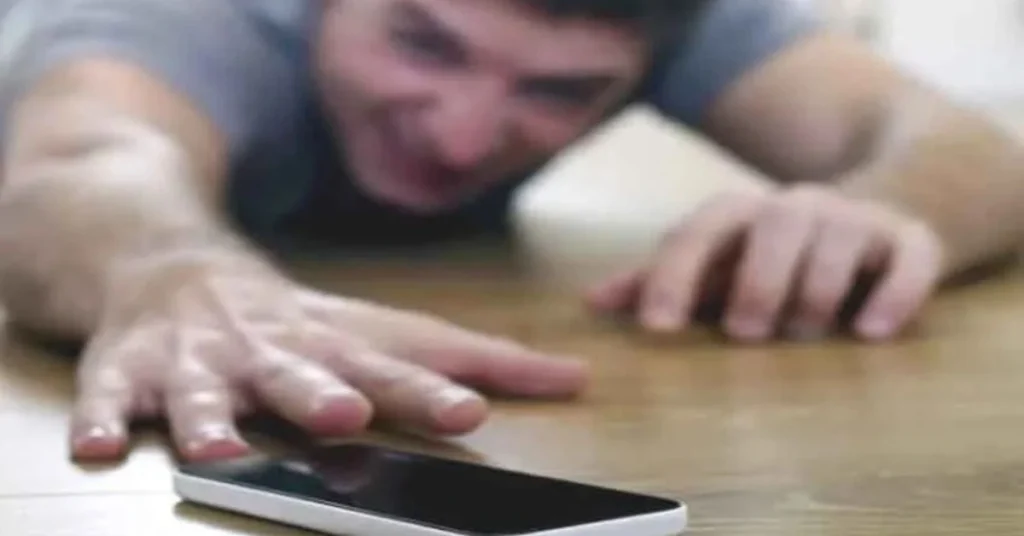
DUBAI (Kashmir English): In this digital age, smartphones have become nearly impossible to separate from daily life.
Mobile phones now serve as essential tools for routine daily life activities including work, family connection, safety, and social interaction.
However, health experts have warned that feeling anxious without a phone is not merely a habit – it may be a serious psychological condition.
Medical professionals refer to this condition as ‘nomophobia’ which is defined as the irrational fear or anxiety of being without a mobile phone.
“No mobile phone phobia”
Nomophobia, short for “no mobile phone phobia,” is the fear, anxiety, or discomfort experienced when someone is without mobile phone or unable to use it due to low battery, no signal, or loss.
It’s a digital-age condition linked to excessive smartphone use, causing symptoms like panic, agitation, trembling, and isolation, as phones have become central to communication, work, and daily life.
According to a study published in the International Journal of Research Studies in Education, around 94 percent of mobile phone users in the United States experience nomophobia to some degree.
Although the study exclusively focused on the US, psychologists working in the Middle East – particularly in the UAE – say similar symptoms are rapidly emerging in the region.
Doctors explain that nomophobia often goes unrecognized by individuals themselves and tends to appear through subtle, silent symptoms.
Common complaints include sleep disturbances, lack of concentration, irritability, anxiety, and mental stress when the phone is not within reach.
Psychiatrist Dr Omar bin Abdulaziz of NMC Royal Hospital Abu Dhabi says patients rarely visit clinics complaining specifically of nomophobia yet its effects are clearly visible in disrupted sleep patterns, mood changes, and declining daily performance.
Various studies conducted on students and young people in the UAE also indicate a strong link between excessive mobile phone use, poor sleep quality, and increased psychological stress.
According to Dr Abdulaziz, when being without a phone results in persistent anxiety, strained relationships, or negatively affects work and education, it becomes a serious concern.
Experts warn that intense panic when disconnected, disturbed sleep, emotional distance from family, and household conflicts are red flags that should not be ignored.
Clinical psychologist Srividhya Srinivas from Mediclinic Kamali Clinic Dubai says though patients are often unfamiliar with the term itself,
cases related to nomophobia are increasingly appearing in therapy rooms.
She notes that reduced focus, anxiety, panic, sleep problems when separated from phones are becoming common symptoms among youth – especially in societies where digital connectivity is deeply embedded in everyday life.
Experts agree that the solution does not lie in banning phones entirely but in restoring balance. Dr Abdulaziz emphasizes gradual and practical changes, such as keeping phones out of the bedroom at night, slowly increasing time spent away from screens, and reducing unnecessary notifications.
Meanwhile, Dr Shaju George, psychiatrist at International Modern Hospital Dubai, says that although nomophobia is not yet officially recognized as a mental disorder, screening for it is increasing in clinical settings.